Tetsuo Funahara of Buppan Soken: How the Godfather of Japan's Reseller Education Began

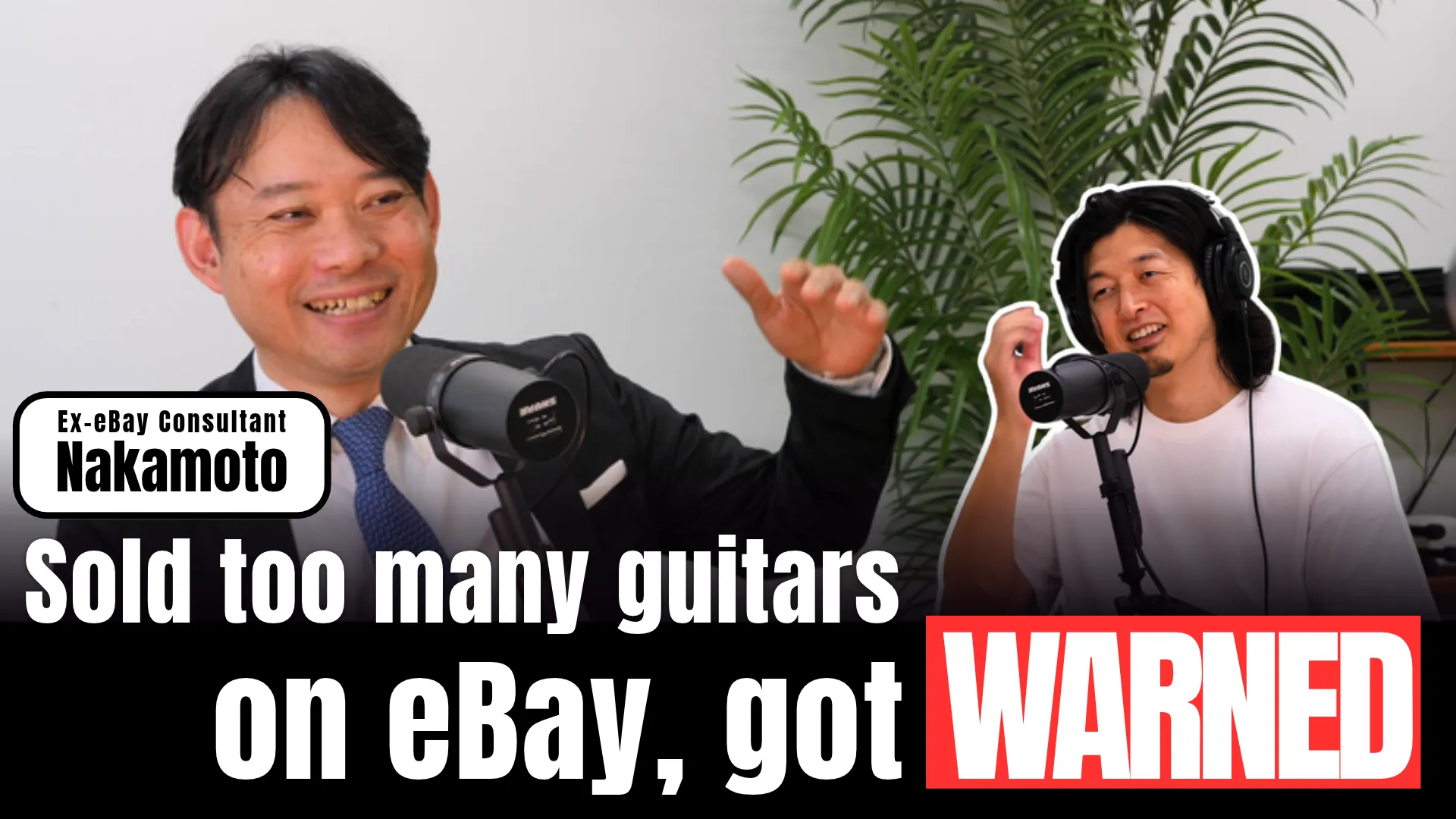
EIKING PODCAST is a conversation series that invites e-commerce sellers as guests. This is episode 10. Today's guest is Tetsuo Funahara, head of Buppan Sogo Kenkyujo (Product Sales Research Institute, or Buppan Soken for short). The host is Eiki.
He got into reselling in college, buying and selling motorcycle parts on Yahoo! Auctions (Japan) and taking orders on overseas forums for personal exports. After grad school, he made money importing used Macs from eBay, then turned that know-how into a course and moved over to the teaching side. Through a book, a members' club, and the Import-Export New Year Party, he built a circle of fellow sellers, and after importing road bikes and running a dropshipping web store, he arrived at Buppan Soken and YouTube. We talked about how online reselling and sharing know-how got started in Japan in the 2000s, how FBA made low-margin, high-volume selling work, and how AI is changing shopping and content. Recorded on October 27, 2026.
About the guest
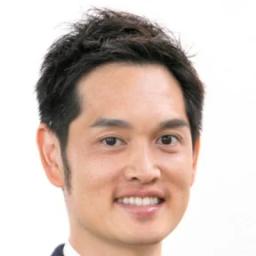
Tetsuo Funahara
Head of Buppan Sogo Kenkyujo (Product Sales Research Institute)
- From Hyogo Prefecture. Studied at Osaka University's School of Human Sciences and finished its graduate school
- In college, bought and sold motorcycle parts on Yahoo! Auctions, and also exported items personally by taking orders on overseas forums
- After grad school, rented an office in Osaka and imported from eBay (used Macs, then road bikes), and then ran a dropshipping web store
- Named his business "Buppan Soken" around 2015. As of the recording, it offers 12 to 13 courses, one for each selling method
- His YouTube channel, "Tetsuo Funahara [Buppan Sogo Kenkyujo]," had about 190,000 subscribers at the time of recording
A hardcore reselling YouTuber with 190,000 subscribers
Alright, let's get started. Thanks for coming. Today's guest is Funahara-san, head of Buppan Sogo Kenkyujo.
Thanks for having me.
Well, a celebrity has arrived.
I don't think I'm a celebrity.
On YouTube, you're number one in Japan for product reselling right now, aren't you?
In Japan, yeah, probably number one.
Overseas?
No, I haven't seen any overseas.
But in Japan, who else is there?
Are there even that many reselling YouTubers? There are quite a few eBay people, but they're not really YouTubers. Most of them run a proper business and just do a little YouTube on the side.
But Funahara-san is different.
I'm pretty serious about it.
True, you're a real YouTuber. In that sense, you might be one of a kind. Someone who's actually doing it seriously. Right now, how many subscribers do you have?
190,000.
190,000. Wow, that's way up from when I last knew.
Subscriber count doesn't matter much, though.
But the views haven't changed?
The way views are counted changed recently, so I honestly can't tell anymore.
But it's still doing well, isn't it?
When it's going well, it goes well.
So you're almost at 200,000. Amazing.
Everyone, please subscribe.
Please do, I'll put the link in the description. When I knew you, you were aiming for 100,000.
It took about five years to reach 100,000.
Five years would be amazing.
No, there was COVID. I got serious about YouTube around the end of 2019, when I started.
But we started around the same time. I probably started around then too.
That's when I realized people actually watch business YouTube too.
True. There wasn't any before that.
Right, there was none. It was like joining the side-hustle wave.
Back then you were doing it in slide format, right?
Yes. I tried all kinds of things, though.
The ANA versus JAL one, didn't that take off? (ANA and JAL are Japan's two major airlines.)
That was COVID, when every industry was in trouble. Like, ANA is in trouble, JAL is in trouble, one of them might go under. A lot of people found that interesting to watch. I don't actually like flying, though. But I love miles.
I remember that one taking off.
From slide videos to follow-along videos
When did it become the style you have now?
What I do now is follow-along videos. Following someone around who's earning, showing how they actually make money. I started that about two years ago, I think.
So that was after you hit 100,000?
Around the time you hit it, I think.
So until then it was the slide style?
The slide style and so on. Of course I also interviewed people who were earning. It was mostly teaching know-how and interviewing successful people.
Since it was know-how, you used slides a lot.
Yes, like "100 things that sell on Mercari." (Mercari is a Japanese flea-market app.)
My wife watched those. It was around the COVID period, I think. She'd never used Mercari, and she decided she wanted to try selling something. She casually sold a bathroom scale first, and it sold right away. She thought that was so much fun, and she started teaching herself. And what she was watching was Funahara-san's videos.
She found a great video.
Later, when I was going to a yakiniku (Japanese barbecue) place in Ginza with Funahara-san, I told my wife, "I'm going," and she said, "Wow, that's amazing. Take a photo." I think I did get a photo taken then.
Hmm, I wonder what happened to it.
I think a lot of people were watching like that, since back then. So, Funahara-san, where should I start? I want to start from the very beginning. When you started reselling.
When I started reselling. That's a long way back.
I mean, it's history by now, for us. These days there's so much reselling information flooding everywhere, by genre, by product category. But when you started, Funahara-san, there was probably nothing, right?
Right. Back then I was young too. I'm a bit of an old guy now.
How old were you when you started? With reselling, I mean.
I probably started buying and selling things at 22 or 23. I was a university student. I became a student in 1999, and I'm 46 now, so that's about 26 or 27 years ago.
Yahoo! Auctions in college, and parting out motorcycles
It was 1998 or 1999 when I became a university student. I'd barely touched the internet until then, but my uncle had a PC-98.
PC-98?
The NEC one. It wasn't a Windows machine. But then someone said you could install Windows 95 on it, so I got it and installed 95, and Windows ran. When I became a student, I lived alone and hooked a phone line up to it. I wonder if everyone remembers this.
A modem, right.
With the modem going beep-beep-boop,
that era, right.
Yeah, that's how I used the internet. And around then, Yahoo! Auctions (Japan's biggest online auction site) launched. In 1999, I think. I think I made an account around 2000.
It launched around then?
The modem's beep-beep-boop was incredibly slow. And it cost money too, so there was a flat-rate plan starting at 11 p.m. called Telehodai, with unlimited calls.
You remember it well. From 11 p.m.
Wow.
At that time, the university terminals were NeXTSTEP machines.
NeXTSTEP? What's that?
You wouldn't know NeXTSTEP, right? It's a UNIX machine, and what it evolved into was macOS, actually. Jobs was involved.
Oh, really? So back then, it wasn't that common in Japan?
Not common, rather, probably only Osaka University was using it. For some reason, the people at Osaka University used this UNIX-based NeXTSTEP. So there was no Internet Explorer. I was using some odd browser. I forgot its name.
An earlier browser, you mean?
Right. Some browser I didn't know. But the internet was fast.
Like fiber-optic today.
It's a university, so it was way faster than a regular household. Compared to the one from 11 p.m., it got about two megabits. Two megabits in that era, that's fast, right?
Sounds fast. Was that the ADSL era?
ADSL was just about to arrive.
Around when Masayoshi Son's Yahoo! BB modems started being handed out.
A little after, maybe. It had been 128 kilobits, and it became 2 megabits, so twenty times faster.
You'd feel that, yes.
And then I used Yahoo! Auctions.
Selling things there?
More buying, really. I loved motorcycles. I was modifying a small bike quite a bit, and the parts for that were being bought and sold on Yahoo! Auctions. I'd buy those, and then you end up with leftovers. The bike I'd been riding, for example, I'd sell that again. That was probably the real start, I think.
I did that kind of thing in high school too, so we're about the same. Mine was probably five years later, though.
Right.
I bought a big scooter, brand new, scrapped it in a month, bought another, and took it apart and modified it myself.
Back then, modified bikes were selling pretty well, so I'd buy one, take the body completely apart, and just by selling the parts on Yahoo! Auctions, I could really make 50,000 to 100,000 yen.
So even from then, you were a businessman.
A bike with a muffler that sells for 78,000 yen was being sold for 80,000 or 90,000. Isn't that odd?
Yeah, that's odd.
Right? The people who sold them probably didn't know that. And with engines, too, taking it all apart doubles the value. Like selling just the cylinder head. When you take it apart, sometimes there's really good stuff inside. You think it's iron, but it's aluminum.
You take apart even the engine? That would sell, definitely.
It takes a lot of labor, so ordinary people probably can't do it, maybe. But that's when I noticed that the internet, or rather, selling online, was profitable.
Teacher training, grad school, and two books that changed his mind
What were you aiming for back then?
I was a university student while doing bikes. Without any particular goal. Actually, I may be saying this for the first time, but I entered university intending to become a teacher.
Seriously? Which faculty?
In high school, you don't know what jobs exist. But you have to decide on a path, so I figured I'd pick a place where I could become a teacher, and I entered that faculty. I even did a teaching practicum.
Really, Professor Funahara?
I did a teaching practicum. I also earned the credits to qualify for a teaching license, but I never got the license.
You didn't? Normally everyone gets it during university, right?
Right.
But you didn't, Funahara-san. An outlaw.
I thought, whatever, and it just ended up that way. I don't mean to offend any teachers, but I think it's really tough. It takes a lot of preparation, and parents say a lot to you.
It's really tough.
So I did go to grad school. I had nothing else to do, and I was still chasing a dream.
So at that time, where were you living?
Osaka.
I see. You're from Hyogo, right?
I'm from Hyogo, and I could've commuted, technically, but I lived in Osaka's Ikeda City and Toyonaka City, wonderful towns.
That's a bit to the north, right?
It's called Hokusetsu.
I think I was a grad student then. I thought I'd read a book or something. You don't read business books as a university student back then, right?
You don't.
I don't know why, but I read a book by Kenichi Ohmae called "Kigyo Sanbo" (The Corporate Strategist). It's an incredibly good book. Even now, I still read it from time to time.
I've never read it.
Oh, it's good, really. He's a legendary McKinsey consultant. I read that book, and I thought running a company, managing a business, sounds really fun. It was one of the books that made me think about starting my own business, or rather, about wanting to do something like consulting instead of being a salaried employee. The other one, I don't know why, but I read "Rich Dad Poor Dad." That book came out around 2003, I think.
But everyone reads it at least once, right? I think I read it somewhere too. I don't know why. It was really popular back then, wasn't it?
In Umeda, there's a big bookstore, and I loved going there. I'd wander around in circles, looking for an interesting book. I think that's where I bought it, brand new.
I read it and thought, wow, you really can grow your money if you work at it, you can make money work for you. I never thought there was any path other than working at a company and getting a salary. Then I read the second book, "Cashflow Quadrant," and that's where I learned about financial independence and ideas like that. And I thought, money is what matters.
And young Funahara thinks, "That's money."
Failing the foreign consulting firms, and a job in Hiroshima
Was that when you were a grad student?
Yes, when I was a grad student. I wanted to go into consulting, so I decided to start job hunting. I think I was 23, in my first year of grad school. Job hunting basically starts a year ahead. It's called M1, the first year of a master's program. From around summer of my first year, I figured I'd give job hunting a real try, signed up on Rikunabi, Mynavi, and so on (Japanese job-hunting sites), and decided to apply to consulting firms for starters. I remember this really clearly: McKinsey, Bain, the ones Kenichi Ohmae talked about.
Bain is huge these days, isn't it? For example, they bought Kioxia, right? Bought it from Toshiba and relisted it.
I thought I'd apply to foreign-owned consulting firms like that, and it was brutal. I went to Osaka University, which in Japan is about third or fourth in terms of academic level. But when you apply to those places, it's all University of Tokyo and Kyoto University students.
Really?
Like, "You're not from Tokyo U?" It's basically Tokyo U or everyone else. Like, "Why are you here? You can study? Wow, you made it here."
In the interview?
If I'd even gotten to the interview, fine, but I got cut at the first round, the written test.
I see.
I failed. That's when I learned how big the world is.
Did you give up then?
I didn't give up, but at that point I wondered what startups were out there, and after trying a lot of things, I don't know why, but I ended up joining a company from Hiroshima that had come to some job fair. They wanted to do consulting for hospitals. They hadn't done it yet, but they said it could work in theory. They were a company selling mobile phones. I think it's still around. I don't really know, I haven't looked into it.
I talked with the president, a really young guy, I think in his twenties. He said he wanted to do hospital consulting and asked me to join him. But I told him I was a grad student, and he said, then come right now. Normally you'd join after graduating, right? I was still a first-year,
like an internship?
From their side, they said take a leave of absence and come for a bit, and I figured, why not. So I took a leave of absence. I figured I'd work in Hiroshima.
You went to Hiroshima?
Yes. Companies in Hiroshima only have people from Hiroshima, Okayama, Ehime, or Yamaguchi.
Really?
In Hiroshima city?
Right in Naka Ward. I worked right next to the Atomic Bomb Dome.
Oh wow. So you moved over there.
I moved. I lived next to Yume Town (a shopping mall).
There's a Yume Town, right. That takes me back.
It was really the very beginning, and it was like clinic startup support, so I went to see doctors and looked for properties, which was kind of fun. But then I figured something out. I realized I couldn't get up in the morning. They said come at 9, and I had to be there by 9, but seriously, I'd wake up around 8:48. I was kind of a hopeless person.
So you were a social misfit.
I realized after about six months that this might be impossible. It wasn't about the work itself. Also, I hadn't taken a leave at that point. I was going to the company three days a week and grad school two days, and thought, this is impossible, so at the six-month mark I took a leave first. At the same time as taking leave, I decided to quit the company too. I told them I was quitting. I'm sorry.
So you took a leave from school, and you quit your job too. So you suddenly became free.
Right.
The warehouse at home, motorcycles, and discovering the world through Google
Then my career as a "home security guard" began. (Japanese slang for someone who stays home all day without a job.)
Were you still in Hiroshima then?
No, no, I'd already gone home. I went back to my parents' home. Kakogawa City, Hyogo Prefecture.
How does it connect from there?
First off, I was just tired. Of working life as an employee.
It was so sudden. I think people who work as employees all their lives are amazing. We have employees at our company too, and I really think they're amazing. Because we can't do it.
Thank you. I was just worn out. Not depressed or anything, just like, I'm tired of life. I had no motivation for any job. And when that happened, I went back to my parents' place. For some reason, my parents' house has a warehouse. My family ran a yuino shop,
A yuino shop?
A yuino shop, you know. I think sales are probably zero now, but in the old days, when people got married, they'd do a yuino, the betrothal gift exchange.
You mean like dressers and such?
We sold yuino decorations and such, and during the bubble era it was very profitable. And there was a warehouse attached to the house to store those betrothal gifts. It's that kind of property.
That's rare.
It's something. It even has a winch and everything.
A real warehouse, then.
If I have a warehouse like this, I thought I'd do that thing, modify motorcycles, and I played around with them.
You were just playing around, not working. That takes me back.
I modified motorcycles and rode them around. Around that time, mixi (a Japanese social network) came out.
Was it just launching then? mixi was invitation-only, right?
Right. I think someone from grad school invited me, and I started mixi. That thing has communities, right?
Yes.
On that, there was stuff like "motorcycle lovers, gather," in the Kansai area. I often went riding.
By riding, I don't mean making a racket, like those old-school biker gangs, it was touring.
Touring. So really, places like Suzuka.
That kind of place? At the circuit.
There were riding meets at the circuit, so I figured, might as well ride all the way to Suzuka. Touring all the way to Suzuka.
That sounds great.
It was fun. I even rode in the snowy mountains of Kyoto.
Snowy mountains?
Snowy mountains. What I rode was a fairly old Honda four-stroke bike, but there were three-wheelers too, so I put paddle tires on a three-wheeler to ride in the snow. You don't hear about that these days, though.
Seriously? Are there people who still do it?
Probably, I'd guess. It's fun, though.
Sounds fun. Scary, but a bit.
I went back to school and kept attending, all while on home security guard duty.
That's a long stint as a home security guard.
Yeah. And that's when I noticed Google. I think around 2004 or 2005, I became aware of Google's existence. ... No, it was earlier. I knew about it from around 2002. Come to think of it, sorry. Around when I graduated from university, maybe.
That's early.
Yahoo! was basically the standard in Japan, and it was Yahoo! all along. We used directory search, remember?
We did.
When you did a plain free-word search, it was Google. The difference between Yahoo! and Google is that you can search in English. I hadn't noticed that until then. I realized that the internet connects to the whole world. With Yahoo!, I was only getting Japanese information, but I realized I could contact people overseas.
Taking orders on overseas message boards and exporting as an individual
So I'd collect information about Honda bikes and such overseas. Back then there were things called BBSs,
message boards. Like 2channel.
People set them up on their own, I think that was a thing. I posted a lot on Japanese BBSs, and I posted on overseas BBSs too.
So was your English pretty good?
"I'm Japanese." Not really good, no. I figured overseas people wouldn't want old Honda bikes like this, really. But then messages poured in, asking, "Are you Japanese?" I think I was like an alien to them. Why is a Japanese person posting here?
True.
Yahoo! Messenger pings kept coming in nonstop,
Wow. Like a hero.
Right. They'd paste Yahoo! Auctions URLs, saying, buy this for me. Isn't that amazing?
Amazing. That's exciting.
So I'd buy it, and ship it by EMS (Japan Post's international express mail) and such. I think I was doing that back in college too, come to think of it.
Then isn't that personal exporting, earlier than the Executive Club (a sellers' community)?
I might be the earliest.
The reason I remembered this is that on my college graduation trip in 2002, I went to Europe. And in Belgium, I met someone who bought a bike from me. I even have photos. So I was already exporting by 2003.
Wow. So you weren't "Funahara the importer" at first.
Right, at first. I remembered.
I took orders through BBSs, dealing in Japanese parts.
How did you handle payment?
Bank transfer. International remittances. And also, maybe I used PayPal.
Was PayPal just starting then?
Probably, yes.
But the money that built up in PayPal still had to be transferred to the bank, right?
Right. So I vaguely remember the bank calling me every time. It was payment in advance, prepayment.
Wow.
Doing that, I vaguely realized by then that selling goods overseas or in Japan makes money, I guess.
But you didn't think of making it your main job yet?
Not at all,
just pocket money?
Yes. When I went back to grad school and was about to join a company, I remembered, oh, I used to do this. I did both exporting and importing. It was eBay, I think, at the time.
Oh, eBay.
I listed on eBay too.
So that wasn't like a business yet?
Right. Since I was a grad student, it was like, let's try it. But I think I earned quite a bit. I think annual sales were easily over 10 million yen. I remember it vividly. I was making about 300,000 yen a month, and I remember thinking I didn't even need to work.
For a college student back then, making that much, you're living the high life.
Exactly. Man, that takes me back.
From grad school to an Osaka office: importing from eBay
That's great.
So that was around 2004, 2005, and then in 2006 I thought, okay, it's about time I got serious. Here's why. I graduated from grad school in 2005.
Oh, so you did graduate.
Yes, finally. After taking a year off, I turned in my master's thesis properly, and my thesis was even covered in the newspaper.
Wow, really? So you really did graduate properly.
With excellent grades. On the entrance exam, too, I think I got the top score on the grad school test.
Seriously? So you're really smart.
I was a top student, at least. Everyone figured I'd just become a researcher, that's what they expected of me. I did end up at a "research institute" in the end, but sadly for them, I retired from the research path.
So you graduated without a job lined up back then. Right?
No, I had no intention of getting a job. It just wasn't going to work for me. I was wondering what to do, and I could already make money selling products, so I figured I'd give it a real go. And I graduated from my parents' house, too.
Graduated from home, too. Your parents are like, isn't it about time?
Yeah, that's true. Like, how long are you going to stay here? When I saw Shizuka Arakawa (the Japanese figure skater) win the gold medal, I thought, I've got to do something too. That was the Inabauer moment (her signature backbend move).
Were you watching it with your dad?
Late at night. For some reason. I thought, I've got to move out soon, I've got to do my own "Funa-bauer."
I see. So you were already thinking that back then.
Yeah. Then I moved to Osaka again, in 2006, I think. I decided to really start a business. Home was in Toyonaka, so I rented an office. Out of nowhere.
Wow.
In Nishinakajima. Nishinakajima is a lovely little town, basically a bar district, and I rented an office there. Why? Because it was cheap. Places that would rent to an individual were only around Shin-Osaka or Nishinakajima, so that's how I started. I rented a place for about 85,000 yen.
But that's impressive, going straight to that. I started from my parents' house.
Oh, I started from my parents' house too. Because back then I was probably selling 10 or 20 million yen worth,
oh, I see. With that kind of track record, you could manage it. Right, that makes sense.
Right. Importing stuff from eBay and selling it.
So back then you were doing imports?
I was importing, because exporting seemed like a hassle to sell. With imports, I only had to pick good items.
That's true. With exporting, it's a lot about, you know, personal connections.
Right. I wonder.
I did both, technically, but I think imports are easier to handle.
Definitely. And you can use credit cards, too. I had no money back then, so I bought my stock on a credit card.
Oh, right, of course. Were you doing it all by yourself back then?
At first, my younger brother was a college student, and he looked like he had free time, so he worked for me part-time.
Same as us.
Even then my brother did most of it, and I honestly wasn't doing anything.
Oh, really? So your brother handled the shipping too,
and the selling.
So what were you doing, Funahara-san?
Sourcing. Sourcing, you know, takes a good eye.
Right, that's true.
So we split up the roles.
Importing used Macs: sending the original box to Florida
So what kind of stuff were you selling back then? Weren't you selling Macs or something? I think I've heard that.
I did sell Macs. Mostly computers and antique stuff, I think. One-of-a-kind items.
And you were selling those on Yahoo! Auctions?
100 percent Yahoo! Auctions.
Back then, there was no Amazon yet or anything, right?
No, there wasn't.
Around 2006, maybe. Back then, you definitely couldn't do this now, but Macintoshes were really cheap overseas. And really expensive in Japan. These days, if you buy a MacBook Pro or something, it costs 400,000 to 500,000 yen, right? Back then it did too.
Really?
It cost about 400,000 to 500,000 yen. Those Macs, like the G4, the PowerBook. Like the PowerBook G4. A new one cost about 400,000 yen.
So it cost about that much even back then.
Yes. The PowerBook G4 Titanium. I imported a crazy number of those.
It's actually titanium?
It's actually titanium.
Wow. Giant titanium.
They were amazing. Honestly, I did a ridiculous amount, probably the most used Macs imported in all of Japan.
I see.
I developed a lot of stuff back then, too. First, you could pay with PayPal. eBay sellers and buyers both thought PayPal was good, so we used PayPal, and you could get email addresses too. Also, quite a few sellers won't ship to Japan, so there was the method of using a forwarding company. I think I probably developed that, too.
Seriously?
Yeah, I think so.
Amazing.
After searching around a lot, I found a company in Florida called Access USA.
I don't know it.
There was a company called Access USA, and I literally emailed them, asking, could you ship to Japan?
Kind of like a logistics company?
A logistics company. And they were totally fine with it. I was buying big Mac desktops, like the PowerMac G3 and G4. If I bought one on eBay and had it shipped normally, it would arrive broken, so I'd send them the original box from here, and they'd pack it in that and send it back. They even gave me special handling like that.
Wow. You were sending boxes?
I sent boxes all the way to Florida,
so nothing would break.
So the box and the unit went back and forth, right?
Right. Even with that shipping cost added, you still made plenty of money. Selling one Mac made 100,000 yen in profit.
Seriously?
Yeah, I made a ton. So honestly, around 2006, 2007, I think my income was around 20 to 30 million yen.
A month?
A month.
Crazy.
Right? I thought, this is easy.
Not information, but price gaps found on Google
And that wasn't from some data source or anything. It was Google. You'd search through Google, and there'd be a price gap there. Nobody had noticed, right? Back then.
I don't think they had. For one thing, you probably wouldn't notice unless you were in Japan,
and you'd have to search in English to begin with.
Right, in English. I kind of liked English back in the day. I even worked part-time at an English conversation school.
As a teacher?
No, I wasn't teaching, I had a part-time job. It went out of business, though. It was in Umeda. I worked as an office clerk, and I took reservations in English. Like, "Hello." So that's how comfortable I was with English, speaking normally and all. I still feel a bit weak at it even now, I'm not super fluent, but you can get by, right?
You get by.
You do get by. The people over there aren't all good at it either. So that's how it worked out. Just searching on Google or whatever, you'd find, hey, Macs work for this. In fact, anything worked.
Why old Macs sold for more than double in Japan
The one with the biggest margin back then was Macs. And here's why, because of the difference between Japan and overseas. Japan, even now, is a country of people who carefully keep using old technology. Overseas, once they've switched over, it's like, let's move on to the next thing.
Mac OS, back then Mac OS 9 and OS X were completely different. The single-digit era before and today's two-digit era are fundamentally different inside. OS X was built from the NeXTSTEP I mentioned earlier, so what came before was totally different. But Japanese people liked OS 9.
The older one.
But OS 9 only runs on old Macs, so the price of old Macs was shooting up on Yahoo! Auctions. So something selling for about 100,000 yen overseas would be 250,000 or so in Japan.
I see, so that was the reason. That's why there was such a big price gap.
Yes, exactly. With Macs, that was completely the case. I figured this would end someday, but surprisingly it didn't. I was still selling them until around 2010, even 2012.
Wow. Back then, even though the internet existed, I think information hadn't been democratized yet.
Right, exactly. And everyone was using them for work. Especially people in printing. Printers wouldn't run without OS 9, and replacing all the printers would be a huge deal. They wanted OS 9 just to run the printers, so they'd think, I'll buy an old Mac even if it's pricey.
I see. Wow. That's what's commonly called, what's the word,
arbitrage.
Arbitrage, right. So that kind of thing was possible back in that era. It seems hard these days,
but there are plenty of ways, you know.
There are businesses that still work today because of it.
Nothing is ever exactly the same across the whole world. Back then, just moving goods from Japan overseas, or from overseas to Japan, was enough. As long as you had capital, you could make as much as you wanted. Anything would have worked, really. Antiques worked, clothes worked, and with Macs, each sale was big, because the unit price was high.
And when the unit price is high, nobody else can do it, right? Seriously, bringing in something as big as a Mac from overseas, I don't think people would come up with that idea.
At first, we couldn't imagine handling something that big either. They're huge.
Seriously. And it had to be the original box or it would break.
Forwarding company Access USA (now MyUS)
Access USA.
Access USA has a different name now. It's myus.com now.
The predecessor of MyUS.
Right. It was a company called Access USA, but its domain was myus.com.
I see. I know MyUS, of course.
I think I'm probably the Japanese person who brought MyUS the most customers.
Wow. We were doing it no-look, too. It got to where people were saying, let's use MyUS. So that was your doing, Funahara-san.
Yes, exactly. By rights, MyUS should probably get in touch eventually to say thank you, right?
Now, after all this time?
They should have already. Strange. I think I probably brought PayPal the most customers in Japan, too.
Incorporating for the Yahoo! Auctions store
So where did it go from there, to teaching other people too?
I started teaching others in 2009, but before that, I incorporated in 2007. Until then, I'd done it as an individual, and I wanted to set up a Yahoo! Auctions store. Until then, Yahoo! Auctions charged 3 percent in fees. It was originally zero, then went to 3, then from 3 to 5. But Yahoo! Auctions told me stores could stay at 3. It costs about 10,000 yen a month when you become a store, they said, and to become a store,
So you decided to incorporate. To open the Yahoo! Auctions store.
Yeah, I set it up in order to do that.
Isn't setting up a company kind of scary?
I wonder. It wasn't anything special, I think. But, you know, I set it up in 2007, and the timing was great. From around 2005, I think, the minimum capital system was partly abolished.
Partly.
Until then, a limited company needed 3 million yen in capital, and a stock company needed 10 million yen in capital deposited in a bank. That was the rule, but it was partly lifted, and special "confirmed" stock companies and "confirmed" limited companies came in. This meant that if you put in 3 million or 10 million yen within a certain number of years, you didn't have to put in the capital right away. There was a period like that, I think. My memory of it is really vague.
And then that went further, like, never mind, you really don't need it, and the "confirmed" companies disappeared, and you could start one from 1 yen. Then nobody needed a limited company anymore, and that was around when limited companies were abolished.
So I thought, maybe I can set one up from 1 yen. You set it up with 1 yen?
I set it up with 1 yen, I think. Not 1 yen, I think. Maybe 100 yen. Something like a contribution in kind.
A contribution in kind.
There's such a thing. You put something you own personally into the company as your investment.
Like a watch?
Macs. I contributed Macs in kind. We had a lot of inventory.
So you could do that, wow.
And then, let me think. It was 1, 2, or 3 million yen, I forget which, for the company's capital. I set it up by contributing goods in kind.
Opening a Rakuten shop too
Incorporating was really for the Yahoo! Auctions store, but were you only on Yahoo! Auctions at that point?
Right, so I opened the Yahoo! Auctions store. Then in 2008, we thought, maybe Rakuten (a major Japanese online marketplace) could work too, so I opened a Rakuten shop too.
That was the Rakuten Dream era, right?
It really was a dream. Rakuten Dream, you know, there are probably people who don't know about it. Once you open a shop on Rakuten, a magazine called Dream gets mailed to you.
Oh, really?
Huh, you didn't know?
No, I didn't.
There's a members' newsletter called Dream. They send that to you.
I thought Rakuten Dream was about people who made a ton of money on Rakuten in the early days of the internet. I figured that's what it was.
That's true too, technically. It's called Dream, so
So it was a play on words with that. That brings back memories.
Yeah, it was a pun. And on Rakuten, I was selling antiques. I was selling things like Fire-King, Meissen, and also all kinds of dolls, and I noticed that stuff sold for more on Rakuten. Something that goes for 4,000 yen on Yahoo! Auctions would be 6,000 yen on Rakuten. So I made a Rakuten account too.
So you started selling on Rakuten as well.
And it sold pretty well on Rakuten too. I still remember it clearly. I thought, wow, it sells this well. Because it sold for more.
And Amazon back then was still basically a bookstore, right? I think they'd just started selling CDs and DVDs, right? 2008, 2009?
Yeah, Amazon was. I opened the Rakuten shop in 2007 or 2008, I think, one of the two.
What I remember really well from then is that Rakuten has these gatherings of shop owners, Rakuten runs some of them, and others are organized by the owners themselves. And at the time, I hired someone who used to be a Rakuten shop manager. A woman who used to be a hired shop manager. I hired her, and she taught me a huge amount. She ran our Rakuten shop for us, and it sold like crazy, honestly, and I was like, thank you so much.
Then she said, I used to be connected with people, there's a Kansai Rakuten shop owners' association, so let's go together. But I really don't go to that kind of gathering. I hate them. I don't know why, though. Business owner gatherings, I hate them. Even now, honestly.
Turning know-how into a product and selling it on Infocart
Was it around then that you started thinking about doing it yourself? Teaching.
Not exactly teaching. That was in 2009. By then I already had employees, six or seven of them. A guy I'd hired came to me with info like, this will sell. He loved that kind of thing. He said, this info will sell.
What do you mean?
Like Infocart (a Japanese platform for selling digital info products). Infotop, too. Did Infotop exist yet? Maybe not yet, it was barely before it, maybe. Things like Info Style.
That's what you mean. There was also the info category on Yahoo! Auctions.
And then he told me, this will sell, and I was like, what are you talking about? Back then, I had my employees doing everything, and I wasn't doing anything.
Wow.
So he put it in Word, something like, here's the method I'm using now, made it as a Word file, turned it into a PDF, and sold it on Infocart, I think it was. It was about 15,000 yen, I think.
A how-to on importing.
Right. It was called "Auction Arbitrage."
It's a legendary training material, right? Even looking at it now.
I think, I could still make money with this. It mentions MyUS and so on. And Aucfan (a Japanese auction price-search site).
Totally. Is that still on sale?
Is it still being sold? It might still be on Infocart.
It sold surprisingly well, I think. So I think that's why he kept at it. I didn't even ask affiliates to promote it. But I think it was 15,000 yen, and an affiliate would get 5,000 yen if they sold one, or something like that. I wasn't really into it at the time either, so I just told my employee, if it'll sell, go ahead and try it.
And he did all of it for you?
He did all of it. I think he even made the landing page.
So without him, there might not even be Buppan Soken today.
Without him, no.
He may have ended up changing a lot of people's lives.
Yeah.
And that sold pretty well. Well, I think it was maybe 500,000 to 600,000 yen in profit a month. Still, that's impressive. Back then, with product reselling, you had to hold tons of inventory to sell,
and this was without any inventory, right?
Right. You'd hold inventory and make 3 million yen in profit, and on top of that, 500,000 or 1 million yen in profit from this, with no inventory. I remember thinking, wow.
So what did you think at that point?
I decided to do this. Because I had nothing else to do. I think it was September 2009. I remember it really well. At that point, it was basically just sell it and that's it, right? But anyway, I decided to start an email newsletter. I wrote the newsletter on Mag Mag (a Japanese email newsletter platform).
I realized that unless you keep supporting people properly, you don't get results. People who make money just by being handed information are real geniuses.
That's true. You do need support, right?
Yes, you do. So I thought I'd build a support system too. You sell the info, and a few months later, you set up a kind of support membership, something like 10,000 yen a month. There was no support system available then either, so I remember building it myself.
Is it like email support?
No, I built a ticket-based one. You'd log in with an old CMS like Joomla or XOOPS, answer through tickets, and I remember building a system for publishing content too.
I see.
I love building that kind of thing. I can't program, but with no-code. And payments were through PayPal.
PayPal, that's your specialty.
It's my specialty, yeah. With 100 members, that's a million yen coming in through PayPal. I thought, this is amazing. And besides, the people who do the support properly every month are the ones who make money. It's obvious, of course. Because questions always come in. So answering them became my job from then on.
Oh. So the entry point was Auction Arbitrage on Infocart and so on, and then the newsletter went out to those customers?
Right. The newsletter was for both.
So you had a regular blog too, or something like that?
I sent it to existing customers, and for new, I mean potential, customers, I'd bring them in through Mag Mag and run it that way.
Free reports. You'd download tons of them from free newsletter platforms. Like, if you want this PDF, give us your email address. Then you get added to the list and the newsletters start coming.
Right. When you send out the newsletter, things like Infotop and Infocart just sell normally, so I thought, this is interesting. It could lead to a business, too. That's what I thought.
Back then, I think email marketing didn't really exist yet.
It wasn't mainstream at all yet. Email newsletters and so on.
The book deal and the members' club FMC
Going way back, there was this one influencer. There are probably mixed opinions about him, but he really helped me a lot. He contacted me and said, why don't you publish a book? And through him, I got introduced to a publisher.
And that's how you published it? The one with Horiemon (Takafumi Horie, a famous Japanese entrepreneur) on the band?
Right. I sold the training material in 2009, and I think it was 2010 when I published the book. That was really tough, you know.
A book? You published a book?
I did, yes. I put out a book with a weird title.
The book was really good, too.
When I asked the publisher why the title was like that, they said a normal title probably wouldn't sell. Something like "Introduction to Importing from eBay" would never have sold back then, right? So they said, let's make it sound more edgy. And it sold pretty well.
Is that right?
It sold about 24 or 25 thousand copies. Well, not sold exactly, it was printed. For some reason, a lot of people picked up that book, read it, started reselling, and succeeded. Even now, I still hear from quite a few people who say they're still earning.
That's amazing. Is that when you started the membership thing?
Yes, I ran a membership.
What was it called?
Free Millionaire Club.
FMC, right?
Right, FMC.
Back then, around 2010 or 2009, a lot of the people who started around that time are selling like crazy now. In product reselling, and in info products these days too, the people who've survived are often on a whole different level.
The people who started back then and are still around, definitely. At that time, I was working as a mechanic.
So when did you start?
I joined the Executive Club in 2012, I think.
Ah, around then, right?
The Import-Export New Year Party and helping more people earn
We share a mutual acquaintance, too. How did you two first meet? I was importing from eBay then.
Back then our mutual acquaintance was running a project on Ameblo (a Japanese blogging platform), kind of a "meet 100 people" thing. He said he was coming to Osaka. I forget whether I reached out or he did, but we ended up saying, "Let's meet then." At the Ritz-Carlton in Osaka, a place I'd never even been to, we said, "Let's have tea." I remember we had tea over a 3,000-yen coffee. I think it was 2010.
I see. So that was the first time, and then you said, "Let's have a New Year party," and that's how it started. From around 2011.
We held the Import-Export New Year Party every year.
I think the one I went to was January 2013. I was in Ehime (a prefecture in western Japan) then, so I only remember Tokyo. Somewhere in Tokyo.
But you wore ribbons, right?
Not annual income, monthly income, right?
Monthly income, yeah. People making over 300,000 yen a month and people making over a million. You wore the colored ones, didn't you? I think that was probably the first time we rolled that out. Where was that?
I remember speaking up front at that one. I was swaggering around.
The swaggering days, huh.
Right, so I remember speaking then. And at that time, I had a line of people, you know.
Yeah.
Yes, exactly. No matter how much I say "you can earn this much," people just think, "Well, he could do it because he's him." But from an ordinary person, from the same position...
I get it. "Funahara-san, you were the first, after all."
People end up thinking that. It's like being told by Shohei Ohtani, "This is how you hit home runs."
Yeah, I guess so.
Well, I'm not claiming to be Ohtani. But if someone who learned from Ohtani could do it...
I'd definitely be curious.
Say Ohtani taught a kid, and three years later that kid made it to the majors. You'd go, "Wait, what?" and want to hear that story, right?
You'd want to hear how he mastered it from Ohtani. I'd be curious, for sure.
I realized that too. It's important to have lots of people succeed, and have those people say, "That method is amazing." I had this kind of SEO way of thinking.
I see. What were we talking about?
About when our mutual acquaintance showed up, I guess. And that I realized it's important to produce lots of people who earn.
After Macs, importing road bikes
Basically, that was running alongside the FMC.
That's right. Around then, Macs had stopped selling. But I could sell anything, so I looked for something else. The first thing I did was bicycles. Bicycles are big, you know. It's a bit different now, but the bicycles from overseas are mostly road bikes, which Japanese people love.
Road bikes. I have one. Like a Trek? Is that the kind without brakes?
They have brakes. The ones with really thin tires. Trek, Colnago, Pinarello. I bought those from overseas and sold them in Japan.
So what you do hasn't changed much, has it?
Not at all. I even hired mechanics and had them properly service the bikes.
Wow. So you added that kind of value.
Overseas bikes, for example, have the brakes assigned the opposite way, front and back, from Japan. Interesting, right?
Scary.
If you don't notice that and sell them at first, you get complaints like, "It's backwards!" I dealt with all of that. Also, I signed contracts with Japanese wholesalers so I could bring in proper Japanese repair parts. Shimano is used on bikes all the time, so for bikes that were slightly broken overseas, I'd repair them properly with genuine Japanese parts and sell them. That earned me 50,000 to 100,000 yen per bike. So I think around 2011, I already had about 200 million yen in annual sales.
Amazing.
I sold a ton of bicycles.
An online shop stocked from overseas retailers
With bicycles, I noticed something. Overseas has a lot of cheaper stuff. I'd been buying on eBay all along, and I bought repair parts from Japanese wholesalers too, but I was also buying quite a bit from overseas online shops. For bike parts, there's a British company site called Wiggle, and I bought a lot of wheels and things there. I thought, if I just source these and sell them on Yahoo! Auctions, I'd make money, and I was selling that way. But then I realized I didn't need to sell on Yahoo! Auctions, and I decided to build an online shop. I think it was 2009 or 2010.
Online shops barely existed then, right?
It was the era of "if you want to sell, it's Rakuten." Having your own shop wasn't a thing. There was no Color Me Shop, no MakeShop (Japanese online-shop builders), no SaaS-type services. What I did back then was go to Yodobashi (a big electronics retailer) in Osaka and buy software that came with a book on how to build an online shop. It was called Net Shop Owner Pro.
I've heard of it. Is that something you install?
You install it, fiddle around, and it generates HTML and CGI, and you upload that by FTP.
Like the old Homepage Builder or Dreamweaver. You make files locally and upload them.
That's how it was back then. So I just kept tinkering away and built my own online shop. A shop selling bicycle parts. For example, a wheel that costs about 400,000 yen in Japan, I was really selling for 250,000 or 300,000, because I could buy it for 200,000 at Wiggle. And then I realized I could buy it after it sold. If I order from Wiggle, it arrives in under a week, even though it's from overseas. So I registered all of Wiggle's products, grinding away by hand.
By hand.
Plain manual entry, of course, for that era. I put the English descriptions in as they were, and wrote in Japanese in the description box, "Delivery will be in about two weeks." I sold by bank transfer and so on, and it sold quite well.
Wow. How did you get customers?
I didn't do anything. It was SEO.
Natural SEO, right.
Natural SEO, right.
Isn't that included in Auction Arbitrage?
No, it's not. If you did that, you could really make about a million yen a month. Easily. And it was dropshipping, too.
Wow. That's a groundbreaking idea.
A course set to launch on March 11, and the spread of dropshipping
And then, on March 11, 2011, we were going to release the course on that dropshipping online shop method.
March 11. Together with the person who came up earlier, right?
Right. When I taught him this method, he did extremely well with it. He'd also built online shops for ceramics like Lladró and was selling a ton, so we said, "Let's do it together," and the two of us made a course on online shop arbitrage. Then, on March 11, 2011, just as we were about to start selling, there was a huge earthquake. All of Japan was shaking.
That was an incredible day. So you decided, "Okay, not today"?
We did, we did. We figured selling on a day like this would be bad, so we postponed it a month and then sold.
Wow. So that was that era.
That sold really well too.
I do have an image of it. By the time I started it was a long time before, but even so, I knew about it. Dropshipping, the idea that it's okay to sell even one item. I think the times hadn't caught up yet.
Some people sold on Yahoo! Auctions, some sold through online shops, and on Rakuten a lot of people were dropshipping to begin with. Overseas had the concept of dropshipping, and it was accepted. In Japan, there was dropshipping too, technically, like Moshimo Dropshipping (a Japanese service), but it wasn't something you'd make money from. You could source goods, and sell them on blogs and ship them, but I never saw anyone actually making money.
About two years later, in 2012 or 2013, we were doing dropshipping in the Executive Club.
Overseas dropshipping, yeah.
Overseas dropshipping, right. So by then, dropshipping had become pretty mainstream. Like, "Dropshipping works!"
Wow, that's something. Like, "Let's go all in!"
Even now, dropshipping on eBay and so on still sells quite well, doesn't it?
eBay is still doing quite well, totally.
Amazon's early days, and how FBA changed low-margin, high-volume selling
Weren't you doing a lot on Amazon, too?
Amazon dropshipping, yes, that was my start. I did Amazon dropshipping and importing from China at the same time, but partway through I shifted and focused on Amazon dropshipping, for export. I was also picked as a support member of the Executive Club after about half a year.
Weren't you selling something like 10 million yen from the start?
Right. I don't remember the pace, but early on I got up to 500 million yen, and had sold 30 million yen.
I saw that.
By then it was an era of thinner margins, so sales were up, but profit was about the size of the consumption tax. Early on, sales weren't nearly that high, but with first-mover advantage, the margins were totally different.
Yeah, that's right. If there's something new, it's better to start early. Competitors will definitely increase and things get leveled out, so you end up doing it at amounts where you technically make a profit, but barely.
But dropshipping was good. As long as you don't stop moving, you can keep selling.
Right. It's basically a product-selling system without inventory risk. A lot of the reason people dislike product reselling is that you have to hold inventory, right? So that's an amazing invention.
It's really interesting.
It's become so normal now. We did Chinese-import apparel too, and even Chinese imports are dropshipped and shipped directly now. Direct shipping from overseas, too: if you ship this morning, it arrives the next morning.
That fast?
Yes. It's normal now, but back then it was really something.
For us, Amazon was brand new too. Brand-new Amazon plus dropshipping, it made no sense at all.
Right. I first released my Amazon course in 2011 or 2012.
Importing, is that it?
Importing. Not dropshipping, stocked importing. People started realizing you could sell things on Amazon around 2011 or 2012. For example, they figured out that Amazon's rankings move when something sells.
There were books on that, too. Like "The Secret of Amazon Rankings."
That was when Monorate (a former Amazon price-tracking site) was still alive, right? You could see how many had sold from the ranking changes. And the ASIN, Amazon's product ID, is the same worldwide. Those things were being developed, and we started to realize, "Wait, using the price gap between overseas and Japan, what we'd been doing by eye on eBay and Yahoo! Auctions could be done easily by a system."
It's interesting, on Amazon. Around then, browser extensions came out, where if you entered the same ASIN, everything would show up.
We decided to systematize that stuff too, but at first we didn't know anything about systems, so it was manual.
We were young, too.
We were young.
If I get into old stories, then in terms of product-selling history since then, it's pretty much the same. It's been about the same since Amazon was developed. FBA (Fulfillment by Amazon) got developed around then, too, like, "Oh, there's this thing called FBA." Before that, at Rakuten shop owners' meetings, a guy would say, "I can ship 800 meat buns a day."
The meat bun guy.
"I can ship 800 meat buns a day." That was that person's sales ceiling, how many they could ship. I was the same. How many bikes I could stock and how many I could sell in a day. Capital too, of course, but the shipping limit set the sales ceiling. After Amazon built FBA, it became "sell as many as you want." You could ship any amount. Even 1,000 a day is fine. When it became possible to sell 1,000, I thought, "I could do low-margin, high-volume." Until then, if you did low-margin, high-volume with brute-force manpower, you'd never make money, right? Say you make 100 yen profit on an item. Sell 1,000 a day, and that's 100,000 yen. The fact that you could do that is the amazing thing about FBA.
I see. Right.
Until then, low-margin, high-volume meant shipping with labor costs, so depending on how many items one person could send per hour, if the margin was really thin, you could end up in the red. But with FBA, the cost per item is fixed, so there are fewer variables. That's why you can aim for thin margins. And even if you build a logistics system, you basically have to build it for peak volume or it gets clogged, right? Say you sell 10,000 in December but only 3,000 in March. You still have to build a logistics system that can ship 10,000. With FBA, you can ship as much as you want, when you want.
It's the same with people, right? Even if you hire people who can ship 10,000, there's not enough work in March.
Exactly. So we used to base everything on selling only 3,000, but once FBA came along, shipping got democratized too. And from there, it was amazing.
If you were selling 10 or 20 million yen a month, you were a god back then. That label, too, the 1-million-yen people. At the first event I went to, with about 100 people, there were probably only two or three of them. So they were treated like gods.
Gods, absolutely! Like, "That guy's a god."
At the next New Year Party, there were quite a few more. I was even wearing one by then. Even so, maybe 30 or 40 people.
Your weapons keep multiplying, after all. The ceiling got higher too, and from there, quite a lot happened. Importing from China got developed, and since low-margin, high-volume became possible, people thought, "We can import from China." And then they sold a ton on Amazon. People who say they'll really sell 100 million yen a month, or billions of yen in annual sales, started showing up around 2013 or 2014.
Have the platforms changed in the last 10 years?
I've summed up quite a long stretch, but these last ten years or so, really nothing has changed.
Nothing's changed? Was there anything?
I don't think it's changed much. In terms of platforms, almost nothing. au PAY Market (a Japanese online mall) changed its name a lot, things like that happened, but Amazon, Rakuten, Yahoo!, that hasn't changed. But the e-commerce market itself has grown like crazy, so I get the impression that even if you do the same thing, your annual sales grow.
I see. Have more people entered the market?
I think more people have entered. Also, Mercari came out, and that might have been a big one. It became much easier even for individuals.
Mercari was a latecomer, though. There were a few others back then. Like Fril.
Right. Mercari is about the only one, yes.
As for what's changed, is there anything else?
In terms of platforms, not much, right? In Southeast Asia, recently there's Shopee and so on, and they've been growing, right?
And Korea, too.
Oh, right. We're doing that, actually.
As for the domestic market, there's your own online store, like Shopify.
Right. The Shopify people, especially the dropshipping types, use it to push hard on direct shipping. Shopify is about the only one, I guess. I contributed a little myself. For a while I was kind of a Shopify YouTuber.
And crowdfunding came along, too.
I started crowdfunding around 2015 myself.
Quite a lot of people were doing it, weren't they?
Like, "It sells this much?" It's pretty crazy these days, really. If it's around 10 million yen, even a beginner can aim for it and hit it.
Is that right? Even so, from there, keeping it going is probably the hard part?
Keeping it going is hard. Like doing that 10 million yen in sales ten times a year. But there are quite a few people selling 200 or 300 million yen from crowdfunding alone.
Crowdfunding, and platforms that change after going public
Right. Because on Makuake (a Japanese crowdfunding platform) these days, if you just list something normally, just listing it won't sell.
But we have the know-how to make it sell, so if you do it properly, you can sell 10 million yen or so. If someone who doesn't really understand it lists casually, it's honestly zero.
Oh, I see.
Zero.
With the know-how, even a side hustle can sell, is the idea.
Yes, exactly.
How Buppan Soken began, and a course for each method
Is that what you do at Buppan Soken?
Of course we do.
We haven't talked about Buppan Soken at all, though. Please tell me about it.
Right. So my image is that I've just kept doing what I started in 2009. Teaching all kinds of know-how to all kinds of people.
When was Buppan Soken founded?
I came up with the name Buppan Soken around 2015, I think. Until then I ran things under various names. Since I ran schools, there were always school names, but there wasn't a fixed name. I wanted to create a brand to bring it all together, and so I created Buppan Soken.
So that's about ten years? Since you started the name Buppan Soken.
A bit over ten years, I guess.
So it's been quite a while. In terms of your product-reselling history, too.
Right. In product reselling, there are all kinds of people teaching all kinds of things, right?
How many types are there now?
About 12 or 13 types now.
That's a lot.
It is a lot. There are good points and bad points, I think, but after teaching all this time, I've felt that it really comes down to fit for each person. Some can export but can't import, and sometimes it's the reverse. It depends on the person's money, time, prior knowledge, and personality, so strengths and weaknesses vary quite a bit. And there's also whether product reselling suits you at all. So having a variety of options gives you a better chance of picking people up. That's the good side. As for the bad side, it's "So which one should I do?"
But in the end, doesn't everyone ask, "Which one makes the most money?"
Yes, they do. They do. That's just how it ends up, so we have about five advisors. They're proper employees, and they listen carefully and do interviews. For example, some people have no money but want to do China imports, which costs a lot. I tell them, "Please, not that. If you don't have the funds, let's do dropshipping." If you can work with your hands and have time, let's do something where your labor turns into money, that kind of thing. We do that. Also, the ceiling is different for each person. If someone wants 100,000 yen, doing China imports is actually inefficient.
Right.
With China imports, unless you aim for at least about a million yen in profit a month, it's not worth it.
For the risk, true. So you suggest those options depending on the person?
Yes, we do. Again, there's fit and no fit.
What an impressive research institute.
It really is. But I think the number of people who succeed went up after we started doing that. Until then, there was only one "let's do this." I'm good at importing, so I only did importing. But with only importing, people suited to importing succeed, while people suited to exporting didn't succeed, right?
Right. It'd split by type, I can see that.
So we ended up going, "Let's do all kinds of things."
So each one has their own instructor, right? Like one for Korea export.
We have instructors.
Are those 12 or 13 people all specialized? Nobody doubles up?
They don't double up.
Wow. They do YouTube too, right?
They do YouTube too.
Everyone?
Pretty much.
That's a huge scale, though. Aren't you kind of running the whole scene?
More or less. But rather than people going somewhere weird, I figure they're better off coming to us, so that's what we do.
Old-school info products, and how YouTube changed trust
I do think so.
In the old days, there really were a lot of shady people.
Not anymore?
I don't really know about now, but back then it was pretty bad. A lot of people got arrested, too. Some were scammy, and there were even worse scams, the "we'll give you money" type. There were lots of those. I was in the info products world too, so there were a lot of really shady people. I don't know about recently, though.
But I thought YouTube was amazing. In the old days, people could hide things. Email newsletters, blogs, and you were told to judge and buy based on just a short video they sent you. There was so little information to judge by. There was nothing real to examine, so it was easy to scam people. Now there's YouTube, so people really watch, and think, "Is this person actually okay?" They keep watching and make a judgment. Scammers can't pull that off, because there's no substance.
It'd show for sure, no matter how hard they tried.
Also, the person deciding can take their time. In the old days at seminars, it was like, "Decide right now!" Apparently there were cases where they locked the seminar room door and said, "Make your decision before you leave this room."
Well, yeah, that's how it was, wasn't it.
Having a practitioner cry, or planting shills who say, "Thanks to you, my life turned around." Quite a few people did that.
Seriously?
They did. I think there were some in product reselling too.
That's interesting.
Those tricks don't work anymore, do they?
Right, exactly. I do think it's a good era. But there's also a lot more information now, so you have to pick and choose.
That skill is important. Especially now that AI has arrived, the shape of product reselling will probably change again.
I wonder what'll happen. People say AI will start buying things, right? I buy all sorts of things these days, too, and my number one source is AI.
Buying what AI recommends
I ask AI, and buy what it suggests?
Would you buy it? For example, I ran a marathon the day before yesterday, and around the 30 km mark, I felt I was low on energy. And I slowed down from there. When I told this to AI, it said, "That's energy depletion. You should take in fuel while running." When I asked what to buy, it said, "Buy this." It pushed a really expensive energy gel.
What's an energy gel?
You squeeze it into your mouth while running.
Oh, a drink-type thing.
This time I ran with about four of them, and it said that's nowhere near enough. It told me to bring eight. I thought, "Is this guy for real?"
You can eat that much? I thought it was just water.
No, you really don't get enough calories.
So do regular marathon runners eat during races?
Top runners barely take anything, they say. But top runners can leave special drinks at the aid stations, right? You can leave your own personal drink there, and there's a ton of calories in it. The AI told me, "Make that yourself and bring it."
So since it's "special," if you mess up, it's over.
If you mess up, it's over. There are people who mess up their refueling and slow down because of it.
It's like a race car.
Exactly, exactly. They grab it while running really fast, so they attach handles and put flags on so they can tell which one is theirs. And still, some people get it wrong. If the bottles are the same, it's the worst. So I make mine pink and stuff.
That's funny.
The AI even recommends things like "this British one is good." It tells me to import it.
Really? I probably haven't gotten that far with AI yet. Maybe I haven't been buying new things.
It really does suggest new things a lot. I also do triathlons, so I asked if there's a pair of goggles that shows heart rate. Thought there might be a chance.
It said yes, there is.
There is? Like a Scouter? (The power-level gadget from the anime Dragon Ball.)
From a Canadian maker. It told me to import it. But it's Shopify, so when I hit order, it really did arrive within a week. It's really good. Right here, it shows my heart rate and my current swimming speed.
Where's the sensor on that?
First of all, there's a heart rate sensor.
So it's like glasses?
No, no, just regular goggles.
Goggles means swim goggles. So you check your heart rate while swimming?
I want to see it.
What do you do if it goes up?
If it's higher than I expected, I ease off a bit. I want to swim with it under about 160.
That's interesting.
It really is. I thought, "I want this." When AI recommends something, even a brand you've never heard of gets bought from overseas, I realized. It was pretty expensive, though. I think it was 50,000 or 60,000 yen.
Less search traffic, and publishing in the AI era
So things are probably going to change from here.
Because SEO is dead now. It's really dead.
So the SEO traffic you used to get has disappeared?
Yes. Almost everyone stays on the search page without going to individual pages. The information shows up in the summary at the top of the search page, or they just ask AI directly. So earning traffic through SEO is gone now. It vanished all of a sudden. Shockingly fast.
A lot of e-commerce selling sites ran their own media, right?
It's gone. Mostly gone, yes.
Seriously? They did quite a lot of it. They spent millions every month, one or two million yen or more, writing articles. Aren't they doing that anymore?
They still write articles. If you keep producing proper articles, I don't know for sure, but AI probably references them, so when someone's looking for information about side hustles, it says, "There's also this kind of information," and I think it recommends them. But it has dropped quite a lot. The traffic.
Things like this can happen suddenly, which is scary. So what should we do?
Areas that big companies used to monopolize can now be contested by individuals, I think. So when you make a great product, before, you had to market that product at enormous cost. But now, if you have a good product and a solid reputation, with luck, AI will recommend it to people all over the world.
If you list it on Shopify.
AI picks up Shopify. Amazon blocks AI.
Right.
Putting it properly on Shopify and posting information for overseas, in various languages, I think that's important for people who want to do this kind of selling.
So basically, it's not SEO anymore, it's something like AIO (AI optimization) or LLMO (LLM optimization). That's the important part.
Right. From here on, it's AI.
AI is really coming, isn't it. But marketplaces will still remain, right?
Marketplaces will remain as marketplaces.
Amazon has its own AI inside Amazon, right? Something like Rufus. So it's about getting suggested there.
Before, to sell anything, you had to list on a marketplace, and it cost a ton. You had to pay for ads, that was the situation. But if you just make something good, it somehow sells. It gets picked up. If that's how it goes, then it becomes about putting effort into the product. Will good products really sell, though? In the end, even if you make a good product, selling it has always been hard, right?
Right, exactly.
If that becomes easier, that'd be great, definitely. Even if you make something that meets a niche need, you couldn't spend on marketing for it, but if AI recommends it, that's great.
AI leads you to products you didn't know existed
You wouldn't think there'd be such a thing as goggles that show your heart rate, right? So I asked if there's a pair of running sunglasses that can show the data from my Garmin watch, and it said yes. I thought, "There is?" I was really surprised.
These days there are Meta glasses and so on, right? I don't need those. I don't want to shoot video. I just want to know how fast I'm running and what my heart rate is, without even having to look at my watch. That's surprisingly hard. So I asked for one that shows it right here, and there it was.
Amazing. So is it like glasses for running?
For running and cycling. It was from a French company.
Before, I wouldn't have thought such a thing existed, so I wouldn't have even searched for it. Even if it existed, I probably wouldn't have found it by searching. But if AI recommends it, you'd think, "Maybe it's fine." And it's Shopify, so if you have an account, you'd probably think that.
That's the good part, definitely.
What's next for Buppan Soken, and leaving X
So does Buppan Soken teach that kind of thing too?
Well, that's a bit tough. That's still a bit in the future. But I'm thinking of doing that kind of thing going forward. There's someone I taught a little a while ago who basically made it in life. He sold a company he started as a side business, and it turned into a huge amount of money. So he and I are thinking, let's try to succeed with a business built around our own product, too.
Oh really? So like a school?
A school might be tough. Consulting. Like an advisor. The trendy advisor kind of thing.
That sounds good. It's a dream. When will you start?
When he gets tired of horses, I guess. It'll probably be quite a bit later.
So do you have any other plans for the future? For Buppan Soken, I mean.
With Buppan Soken, if anything, I want to build things that make it easy for people who want to start a business to get going. But as you said, once one thing works, more and more people pile in, and it gets harder to earn, not exactly saturated, but harder. So it's better to make a lot of them. That's the idea, so I'll keep making lots of different kinds of reselling.
And it's not only for beginners. Some people also want to make profits of several million yen a month, right? I'll teach more about that kind of thing too. Like, "If you do this, you can earn 3 million yen a month." There are things like that too.
So you'd teach that kind of thing? Is there a genre you don't have yet?
A genre Buppan Soken doesn't cover yet? Well, we don't do in-store retail arbitrage.
Really? That's surprising.
Surprising, maybe, but in-store arbitrage is a craft skill, so it might be pretty hard to teach.
You haven't been using your X account at all lately, right?
I deleted the app. Because it's all fighting. If it's there, I'll look at it, so I got rid of the app.
So you probably still have the account, but I'd noticed you haven't tweeted at all lately.
Right. I want to put in the effort, though.
So you're living entirely on YouTube. Is YouTube your only social media?
Yes. Just the one.
You're basically a full-time YouTuber, aren't you?
It wouldn't be an exaggeration to call me a YouTuber. As Buppan Soken.
The monthly guild, and the loneliness of selling alone
You hold offline events now and then, like New Year's parties, right?
Now we do a ton. We do one every month.
Is that like seminars?
We created something called the Buppan Soken Guild. I'm not great at this kind of thing, but I realized everyone loves getting together. So only for people who've joined our school, they can become guild members, and there's a bulletin board there, and we do offline meetups, radio, seminars, and online gatherings. We hold those gatherings about once a month.
So is that just seminars and drinking parties?
Not quite seminars, really, more like study sessions. There are people from lots of different schools, so know-how and so on, you can just learn that at each school, after all. Some want to hear from successful people, that kind of thing. Satisfaction is pretty high among the people who come.
Can anyone join if they're in some Buppan Soken program?
Yes, that's right.
Then you could probably build connections with other people, too. People doing different things.
That was actually something people asked for. They want to know whether there really are lots of people doing this alongside them.
True. You can't tell online.
Right, exactly. You feel lonely.
I thought that too. There's a man who's been reselling for about ten years, and the other day he said, "I'm earning, but it's kind of lonely." Because you can do it all by yourself. You really don't meet anyone, and you've been doing the same thing for ten years, so he wondered, "Is this really okay for my life?" He earns a million yen a month, but he's alone. And he lives out in the countryside.
Right, it's the countryside, exactly.
I'm from rural Ehime, and I felt something like that,
so I get it. So I'm setting up an offline gathering, I told him, please come.
True. I think that's a great idea.
Thank you.
We did quite a lot of that back then, too. Before COVID, there was more of it, right? We also held seminars from 2015 to around 2020, and impromptu drinking parties, that kind of thing. It's all gone now.
The people who came to those drinking parties, whether you drink or not, I feel like those people are the ones who succeed. Their drive.
I think how light on their feet they are goes hand in hand with it, quite a lot.
It dropped because of COVID, and also, this is personal, but once you get married and have kids, you go less.
Marathons, triathlons, and trail running
Funahara-san, you do marathons and such too. You have quite a few hobbies, right?
Oh, yes. Marathons and triathlons, mostly. And trail running, too.
Trail?
There's something called trail running. You run in the mountains. It's kind of a spin-off of marathon running. Trail running is pretty long, actually. For example, next month, I think, I'm entering a race: 70 kilometers through the mountains of Izu.
70 kilometers? Not by car?
It's pretty tough. All the way to Shuzenji (a hot-spring town on the Izu Peninsula).
Wait, seriously? I go to Shuzenji a lot.
The finish is just across that bridge in Shuzenji Onsen.
Wow.
Right, it's fun. It starts at 5, and I've booked an inn in Shuzenji, so around 3, they run a bus from there. We go to the start, and then run from there back to Shuzenji.
I see. Shuzenji is my home turf. It's kind of my second hometown, I go there often.
Want to run with me?
I'd probably collapse after about 300 meters.
That race is pretty brutal, though. The time limit is short. I think it was 13 hours, I forgot.
Can you really do 70 km in 13 hours?
On flat ground, no problem at all. I could probably do it in about 7 hours. But it's mountains.
70 km in the mountains is crazy. Before Shuzenji, don't you cross Amagi Pass?
I don't think we cross Amagi. But we do cross Funahara Pass.
What's that? There's a Funahara Pass?
There's Funahara Pass and Funahara Onsen. I'm kind of looking forward to it. I don't know if "looking forward" is the word.
That's amazing. How can you do all that? Did you play sports when you were young?
Not really sports. I did play baseball, though.
I realized something, actually. Exercise, or rather, you can't run a business without stamina.
You really can't. It's better to have stamina.
I do wish I had more stamina. What should I do?
Well, start with running.
You mean cardio?
Either is fine, I think. But more than weight training, I think the ability to keep exercising for a long time matters more. Cycling might be good.
When it comes to stamina, I feel the same way.
You don't get hurt much on a bike. You get hurt a lot running.
Right, true. I pulled a muscle playing futsal about two weeks ago.
That kind of thing gets you hurt, right?
I got my first crutches. I can't really do it right now. Right, cycling, then. Cycling, I could probably do that.
But you like motorbikes, right?
Is a motorbike okay too?
No motorbikes. Well, in English, "bike" just means a bicycle. You can customize them, so it's fun.
Right. I used to sell bicycle parts too. Imported from China. That was about 15 years ago.
I think it's a good idea. Cycling is great. You can exercise for a really long time. You can ride for five hours.
But is that really good enough? You don't get out of breath, right?
Do you get out of breath? No, you don't.
Does it have to be non-electric?
No electric.
A regular road bike kind of thing, right?
Right.
Do people ride from around here all the way to Mt. Fuji?
There's a route for it.
How far is that by bike? If you decided to do a ride sometime.
At events, it usually starts at around 100 kilometers.
Like a race?
Yes. Even 100 kilometers only takes about 3 or 4 hours. At events.
Oh, I see. At Odaiba (a seaside district in Tokyo), when I went there once in a while, there were tons of people, and I wondered what was starting. They said "start," and everyone started going into the sea. We go to the beach at Odaiba a lot, and while I was playing in the sand with my kids, everyone suddenly started swimming. They swam a loop, then climbed out, ran, and went off somewhere. So I think it was probably a triathlon. You enter things like that, right? Sounds tough.
A triathlon is actually easier.
It's easier?
It is. For now, anyway. Triathlons come in lots of distances too. The short ones, swim 1.5 kilometers, 40 kilometers on the bike, then a 10-kilometer run, that kind of thing.
Sounds exhausting.
Those ones are easy.
There's the Ironman, right?
The Ironman. There's the full Ironman, and that one is really brutal. I think I've never done one either. Swim 3.8 kilometers, bike 180 kilometers, then a full marathon. That exists.
That sounds rough.
The half Ironman, I've done many times.
That's half of that? The road looks long, though. If someone who doesn't exercise, like me, wanted to enter that, they'd have to run regularly, right?
Right. Cycling. Cycling is good.
Once I'm ready, I'll let you know again.
Okay. Buy an expensive one. A bike.
Well, then I just have to do it.
You can get one from about 1.5 million yen.
It costs that much? That's more than my motorbike.
They're expensive. Bikes these days.
I'll ask you when I get into it. AI Funahara-san.
Right. Try asking the AI.
Then or now: which is better?
And, um, any promotion you'd like to do?
No promotion. Just, please check out my YouTube.
Funahara-san's YouTube. I'll put the link below. Is there anything else you'd like to talk about?
Let me think. Today, I remembered a lot about the old days, but I thought, this era is great.
The other way around? Listening today, I thought maybe the old days were better.
In the old days, nobody taught you anything. Now you can watch YouTube, and the ways to earn money themselves are all taught to you. In the old days, even to start something, there was a lot you had to figure out, and there were lots of scammers, so it was tough.
Right. Which is better, I wonder. I kind of feel the old days had their charm too. Listening to it now, it's not exactly first-mover advantage,
but I think there's still plenty of first-mover advantage even now. Depending on the genre. I mean, side hustles, people doing product reselling, as a share of the population, are few. There's still plenty of room. There's a person who started last year and is already making a lot of money.
It's getting easier and easier to start.
Kind of democratized.
It keeps getting easier, yes.
I was probably the type who took on challenges, so it worked out for me, but not everyone is like that.
Right.
People like us, probably, are the type who don't overthink and just go for it. That type could have succeeded back then too, I think. But for those who think, if the environment is in place, "I want to do it too, if I can ride along," I think they couldn't back then.
Well, right.
I'm glad I just barely had the internet. If there'd been no internet, I think I wouldn't have been able to do anything.
Exactly. There's the internet, and there's AI, and YouTube. If you can't do it with all that, that's kind of an excuse.
It's true. If you're someone who can do what you're told, exactly as you're told, you'll be fine, I think.
That's what the director says.
At first, if there's something you want to do, just keep going and do what you want to do. I think that's fine.
Got it. So, if you want to learn all that systematically, everyone, please come to Buppan Soken.
We look forward to seeing you.
Is there something like an application form?
Check out the YouTube channel. If you watch it, there's a lot there, like recent close-up profiles of people who are earning, the real stories. Watch someone who seems close to your own situation. For example, if you're a woman, there's a woman like this who did it this way and ended up like that. There are salaried workers too, so you can see a salaried worker who did it this way and now earns about this much. Watch someone who's close to you. Those people, a year or two ago, often weren't doing anything at all. Please do watch.
True. So, with that, it's already about two hours. That went fast. I'm hungry. Well then, shall we wrap up? Today, we had Funahara-san, head of Buppan Sogo Kenkyujo, with us. Thank you very much.
Thank you very much.
Please come again.
Yes. Thank you very much.
Takeaways from this episode
- He got into reselling through Yahoo! Auctions and personal exports in college. He bought and sold motorcycle parts, and took orders on overseas forums and shipped them by EMS. After grad school, he rented an office in Osaka, got serious about importing from eBay, and imported used Macs in bulk
- He found the price gaps with overseas markets himself, on Google. Once he realized he could search in English, he looked up overseas prices, and even sent genuine Apple boxes to a forwarding company so fragile Macs would make it to Japan safely
- FBA made low-margin, high-volume selling possible. Before, sales were capped by how many packages a person could ship in a day. With FBA, the cost per unit is fixed and there are fewer variables, Funahara-san says. He also says the platforms themselves have barely changed in the last 10 years
- Buppan Soken is a school that picks a method for each person. As of the recording, it has 12 to 13 courses, and advisors suggest a method based on how much money and time each person has
- AI shopping and the change in search traffic. Funahara-san says AI is now his main source of information when he shops. Search traffic to the owned media he runs has dropped sharply, but he says he keeps writing articles. He also says that in some product categories, reselling still has a first-mover advantage
LISMOA is an analytics tool that automatically aggregates Amazon sales, fees, ad spend, and inventory costs through SP-API and the Ads API, and shows profit down to the product and SKU level. It currently supports Amazon.co.jp only. If you want to spend less time chasing numbers product by product, start the 14-day free trial.
About the author

The LISMOA Team
Related posts