Akinobu Nakamoto, Ex-eBay Consultant: ¥100M a Year From One Guitar Brand and a Warning From HQ

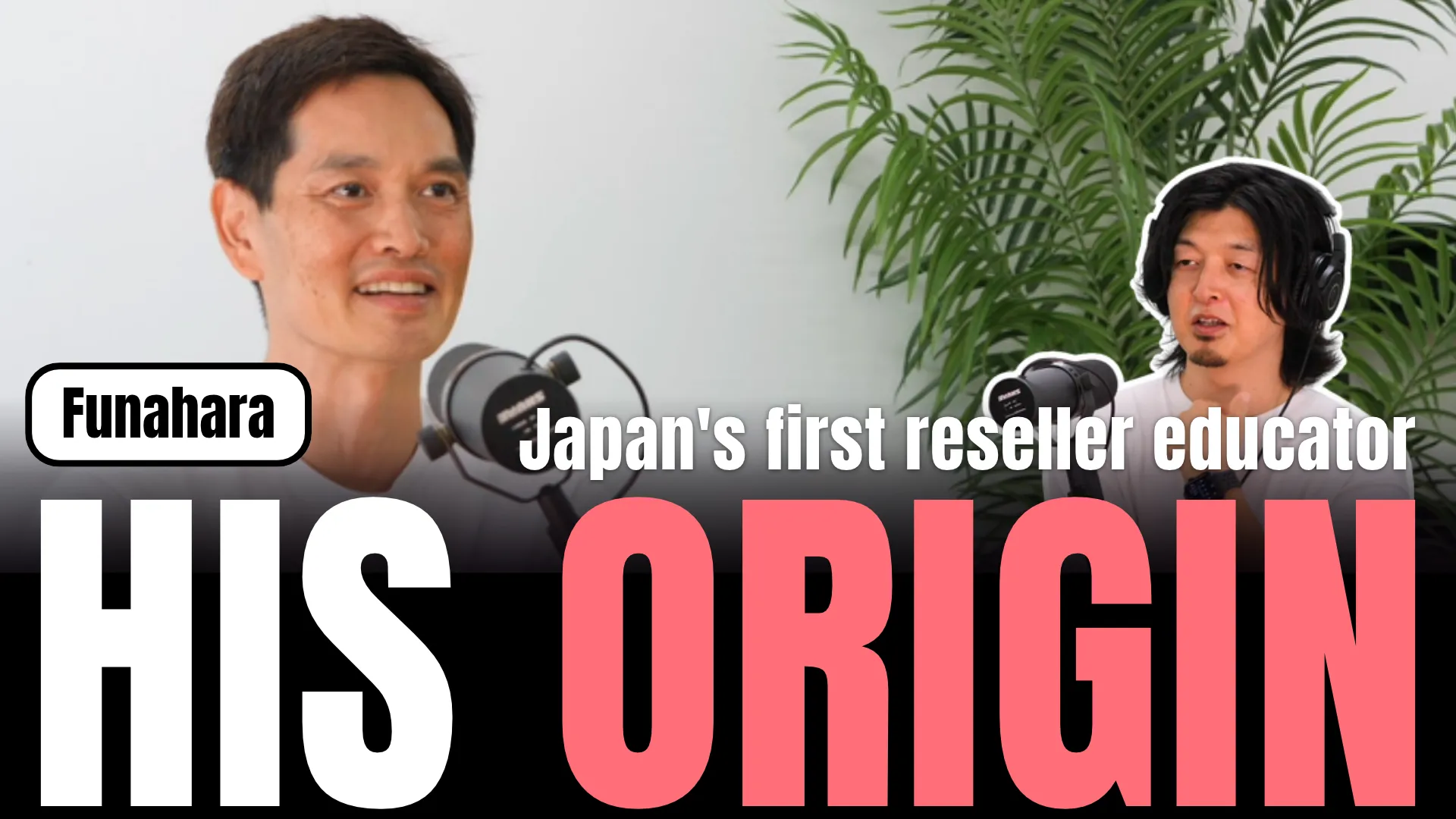
EIKING PODCAST is a conversation series that invites e-commerce sellers as guests. This is episode 9. Today's guest is Akinobu Nakamoto, who has been exporting on eBay for 14 years. The host is Eiki.
He started selling on eBay as a side business while working at a call center in Hiroshima, and reached 100 million yen in annual sales exporting guitars. After giving seminars across Japan and working as an official eBay consultant, he has moved on to repairing and reselling used luxury goods. We talked about the warning email that arrived from a manufacturer's headquarters, why he stopped teaching, how he thinks about refunds of Japan's consumption tax (similar to VAT), how he uses AI, and his days as a salaryman.
About the guest
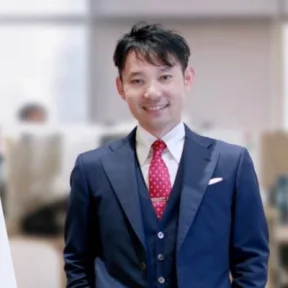
Akinobu Nakamoto
Former official eBay consultant / runs Mono Rebirth
- Born in Hiroshima. Joined a mail-order company straight out of college and worked there for about 15 years, starting in its call center
- After changing jobs, started exporting on eBay as a side business. In his best year, Fender guitars alone reached about 100 million yen in annual sales, all through dropshipping (listing items without stock, then buying and shipping each one himself after it sold)
- Served about three years as an official eBay consultant, after eBay Japan approached him. Shared his knowledge through seminars and a blog
- Now runs Mono Rebirth, a community for learning and practicing the repair and resale of used luxury goods. Featured in a member interview on Antre (a Japanese site for people starting a business)
What an official eBay consultant is, and why you should check primary sources first
Today's guest is Nakamoto-san. Thanks for being here.
Thank you. Glad to be here.
Nakamoto-san, you're a "former," right? A former official eBay consultant. Do eBay sellers know who you are?
I started eBay 14 years ago, so I think people who've been around a while know me. But newer people might be like, "Who's Nakamoto?"
I started around then too, with Amazon. Could you give us a quick self-introduction?
I'm Nakamoto. And "former" means until about three years ago. eBay Japan approached me, and I worked as an official consultant for about three years. I think they wanted to raise awareness for eBay Japan. Besides me, they asked people like Kazuma Hayashi, a bunch of influencer types. I think there were seven or eight of us. We gave seminars and wrote blog posts, but that contract has ended, so I'm a "former."
So there's no one doing it now?
I think there is. There are other certified partners, so please go watch their YouTube channels.
Some of them have YouTube channels?
I think some of them do.
There's something I want to tell everyone first. A lot of people don't actually check the primary sources, right?
Yeah, that's true. It's like that with everything.
Amazon, Mercari (a Japanese flea-market app), whatever. People make a fuss about it on social media, and you're like, "Who's saying that?" "Where's the source?" eBay has plenty of people posting about it too, but the very first thing to look at is eBay.com and eBay Japan's portal site. You should really check that first. That's the first thing I want to say.
So this is for people who want to start eBay, or people who are doing eBay but not getting results. It's the same with Amazon. There's "Amazon Seller University" inside Seller Central, and it covers the basics. But some people skip that and go to some random consultant instead.
I'm sure there are some.
This might come up later, but these days I don't take eBay students myself.
Really?
I quit all that consulting stuff. I used to do quite a lot of it. Seminars, around ten years ago. I did crazy amounts of seminars all over the country.
A seminar tour.
The seminar years, and why he stopped teaching zero to one
We're in Shibuya now, but there was a place called Forum 8 here. Do you remember it? Up Dogenzaka hill, on the left side. It was packed with seminar rooms, a holy ground for info-product sellers.
No, I don't. The name sounds kind of familiar. I guess it's probably gone now.
It's gone. Because of redevelopment, everything's gone. I went there recently and there was nothing left. I was like, "Wow, Forum 8 is gone."
Were you doing seminars there?
Morning, noon, and night. Like three three-hour seminars in a day.
Three three-hour sessions?
That was ten years ago.
That's pretty brutal.
It was. But I've graduated from all that.
But weren't you doing seminars until fairly recently?
Well, last year there were the Trump tariffs. Starting last September, Trump ended the de minimis exemption, and things got really messy.
I bet they did. Amazon exports too, it's the same.
The same. The conditions are the same. It all turned into a mess, and that's when I quit. I thought teaching people from zero to their first sale was beyond me.
So what are you doing now?
For about eight years now, I've been working with a teacher who repairs used brand-name goods and resells them. We launched a service called Mono Rebirth, and inside it I also teach eBay exporting.
So it's not only eBay.
Not only eBay. There's repairing brand-name goods, and eBay is one division of that, basically. Many people sell in Japan, and once you're selling domestically, some of them want to try exporting too. That's when I say, "Then I'll teach you eBay."
So they're people who are already past zero to one. They can do repairs, run a normal business, and want to try overseas as a bonus.
Right. For people like that, I teach it as a kind of option.
You really seem to hate taking people from zero.
Well, I think it's tough. Zero to one especially.
We're airing this as is, right?
Say whatever you want.
All the dark sides of the industry. On any platform, any scheme, any know-how, there's the "80/20" thing, right? About 20 percent of people get results, and 80 percent don't.
Like the Pareto principle.
Right. And because of the Trump tariffs, it's not even 80/20 anymore, it's more like 10 percent.
Ten percent?
Ten percent. It's just too complicated now.
Shipping, for example. When I started 14 years ago, there was only Japan Post. EMS, SAL, or airmail, and then e-Packet came out. That was about it.
Right.
So it was super simple. Big or expensive items, you just send by EMS. But it's not like that anymore.
All of that is gone. EMS is still available, right?
You can use it, but it's not the main option. There's FedEx, DHL, and Cpass, which is eBay's official shipping service. There are just too many variables.
True.
And the people who come in at the "zero" of zero to one have lots of variables too, right?
Yeah. They're all at zero, but their experience varies a lot.
Some people are at zero but have a profile like Eiki-san back then, and some aren't. Charging money to teach that just doesn't work out. The cost of teaching doesn't pay off on our side. The effort doesn't pay off. Not at all.
I totally get that.
Even if you do it, it ends up being 10 percent, and you could easily get called a scammer, right?
Right.
The 90 percent are the majority. So I just thought, "That's enough." Teaching zero to one myself, I'm done with that.
What did you teach people to sell back then?
Back then I was more of a dropshipping seller. I started with dropshipping.
Same as me.
Basically, I listed things that sell, without holding inventory, using tools. But once tariffs come into the picture, regardless of category, mass listing gets hard, right?
It gets hard.
What's the country of origin? What's the HTS code (the customs classification number)? Once it comes to that, it's exactly what I said earlier: "There's no way I can teach this." That's part of why I quit.
Hiroshima and Matsuyama, 14 years ago: Amazon dropshipping, and guitars
The very first time I became aware of you, Eiki-san, was 14 years ago, when I was doing eBay as a side business in Hiroshima.
Fourteen years ago, you knew about me?
I did. What were you posting on? You were doing Amazon dropshipping with your younger brother. I think it was a newsletter.
I had a blog and a newsletter.
Not Ameba Blog, what was it? I think it was WordPress back then.
WordPress. Just a regular one.
And you were in Matsuyama. When someone's close by, you notice, in that era. Ehime and Hiroshima, you know.
Right.
The boxes of items that sold through dropshipping were piled up in your room, and Eiki-san was saying things like, "Seriously, I'm not shipping these." I thought, "Who is this guy? He seems like an interesting guy." That was about 14 years ago. We didn't actually meet. I was just quietly following you. I was a total nobody then too, just starting eBay.
Wow. That's the first I'm hearing of it.
So I guess it was after that that you moved to Tokyo?
Moving to Tokyo, yeah, when was it? About ten years ago.
Then it might have been around the same time. I came to Tokyo about ten years ago too. I started my business in 2012, and I moved to Tokyo around 2015 or 2016. So the timing was the same, just a different platform, Amazon versus eBay.
Right.
I was doing eBay too, actually. I didn't post about it much, but I did it with the same approach as Amazon dropshipping. Compared to Amazon it didn't sell at all, so it wasn't anything impressive. But in terms of history, with eBay I did raise the selling limits properly, and make the phone call.
You made the phone call, right? Back then.
I went independent in 2014, and around then I was in a certain community. For people doing eBay. Mr. K.
Was he doing eBay?
Yeah, he started out with eBay too.
Really? I didn't know that.
There, someone told me, "Nakamoto-san, not just eBay, you should do Amazon too, with dropshipping." And that's where Eiki-san's tool came in. PRIMA (an Amazon export repricing tool).
You couldn't have done it without PRIMA back then, right?
There were others, but PRIMA was the only real choice. There was a tool called APC.
APC.
It was APC, I think.
Amazon Price Check. It used scraping, so it kept stopping all the time. That was no good, so in the end I released PRIMA, which uses the API.
I see.
For a while, both coexisted, at the same time.
I pulled ASINs from Amazon.co.jp and listed them on Amazon.com, basically exporting, and I used PRIMA for the price adjustments.
So you were doing Amazon too. Were you selling totally different things from eBay?
Totally different from what I sold on eBay. Well, actually I did sell instruments. I originally sold guitars on eBay by dropshipping, so I figured, if guitars sell on eBay, they'd probably sell on Amazon too, and I listed quite a lot by dropshipping. But I didn't make much money.
On Amazon, was it just dropshipping, not FBA?
Not FBA, just dropshipping. There were a lot of returns. Amazon.com especially. People use it to death and then return it. Like, "You obviously used this thing to death." With expensive items, returns you ship yourself really hurt. You just find yourself begging them to keep it. By comparison, eBay customers, at least for guitars, were mostly really good customers, with few returns. So I stuck with eBay.
So what got you into eBay in the first place? Was it Mr. K?
That was later. Originally...
A Hiroshima office worker starts eBay on the side: from 200,000–300,000 yen to 1 million yen at Mr. K's school
Originally, I was looking for a side business. I was a salaryman back then, looking at all kinds of side businesses. It didn't have to be reselling. I was still in Hiroshima, in Kabe, in Asakita Ward. You wouldn't know it even if I said it.
No idea.
By chance, a seminar was held in Osaka, and it was an eBay export seminar. I didn't have the money to go to Tokyo, no money for the bullet train. But Osaka I could get to by long-distance bus from Hiroshima Station.
Not the bullet train, but a bus.
Yes, a bus, all the way to Umeda. And that's where I first heard about an eBay export seminar.
Whose seminar was it?
That person isn't around anymore, but he'd published books back then. I went to his seminar, and he said you can export by dropshipping. It was a real eye-opener. I thought, you can actually do this? And back then the exchange rate was around 80 yen to the dollar. That was 14 years ago, before Trump.
Before the first Trump term.
Exactly. And everybody was doing imports. Buy on eBay, sell on Yahoo! Auctions (Japan's biggest auction site).
Funahara-san's crowd did a lot of that.
Funahara-san, Kodama-san too, were selling import content, and everybody was doing imports. But I'm a bit contrary. I wanted to go the opposite way from everyone, and that's how I started exporting on eBay.
So you went to that seminar and joined that school?
No, I only listened to the seminar. I didn't join.
So you started on your own.
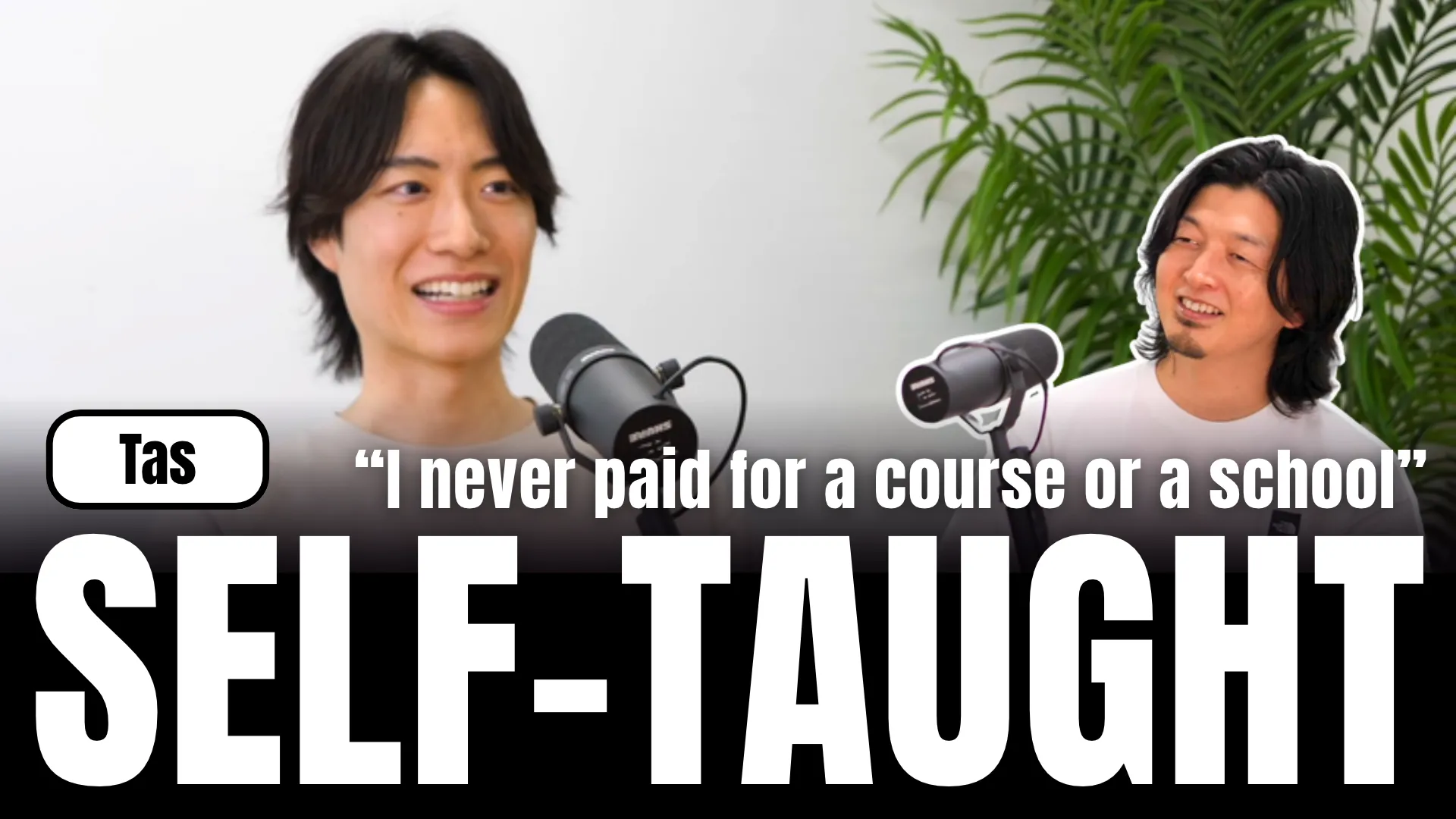
Self-taught. Hayashi-san's blog, and also Yoshida-san from back then, Yusuke-san. He and Funahara-san held import-export New Year parties.
Yoshida-san is my mentor. I started Amazon because of Yoshida-san.
Oh, is that right? Then the Executive Club that Yoshida-san ran back then.
Yeah, that takes me back.
I joined that, and Mr. K was there too. I don't know if I even need to hide his name. Is this okay for viewers to hear?
It's fine. It's ancient history now, like a fossil. People from back then will find it interesting.
So I devoured Yoshida-san's stuff, Hayashi-san's blog, and so on. Back then there were only blogs.
There was no YouTube. Nobody was putting out that kind of content on YouTube.
Nobody. You really just Googled and landed on a blog. Blogs were the voices of the people actually doing it. A few people were putting out books too, and I devoured all of those.
And just with that, self-taught, you got somewhere?
Not really, though. I didn't get that far. My monthly profit, what I actually kept, was probably around 200,000 to 300,000 yen.
As a side business, if you get that much, that's pretty good, right?
But you can't go independent on that. I had a family, and my kids were still in middle school or high school, so I thought I couldn't go independent like this. When I thought I wanted to earn more, I joined Mr. K's consulting, or school, or whatever you call it. That was the start.
Why did you join?
Why, I wonder. Exclusivity, I guess.
The school Mr. K was running, was it from Kodama-san's crowd? Back then there was something called the Net Business Golden Club, NBGC (a Japanese online-business community), and he was one of the people in it.
That's what I remember. But the school Mr. K ran, looking back now, had a pretty good system.
He's smart, that guy.
You absolutely had to submit a daily report. If you didn't submit one, you got kicked out, removed from Chatwork (a Japanese business chat tool).
Sounds like him.
If you didn't submit a report, you were out, so you always submitted it. And once I joined, I'd only been making 200,000 to 300,000 yen, but within a few months I was making around a million. So I went independent. I quit my job too.
So he's quite a benefactor, then.
On paper, at least.
What made the difference? It's not like the method itself changed, right? With eBay and all.
Until then I'd been alone, running it all with just my own resources. He, even back then, was really good at using outsourced workers, and he coached me a lot on that. He told me, "Nakamoto-san, you should bring in more and more outsourcers and run it as a system, you'll grow more." I did what he said, and it really grew.
100 million yen from guitars, a warning from the maker, and what changed after he went public
Back then, nobody was exporting guitars.
Never heard of it.
I did check competitors, Japanese sellers selling instruments on eBay, and there were none. I think there were accounts for Ishibashi Music and Ikebe Gakki (both Japanese instrument retailers), but they had no motivation at all. Like, "We made one, but, you know." Stores where the person in charge was told to make one. I thought, if I do this, I can win. And when I did, it really sold like crazy.
What's the average price of a guitar?
They've gone way up now, but even back then I was selling guitars around 200,000 to 300,000 yen. Fender and Gibson, those two.
You sold Gibson too?
I sold Gibson.
With Gibson, there are more expensive ones, right?
Ones around 400,000 to 500,000 yen, like a Les Paul. I sold a ton of those.
Used?
I sold used ones too, but new ones as well. In my best year, with Fender alone, I was selling about 100 million yen in annual sales.
Guitars alone.
If you group by brand, Fender alone.
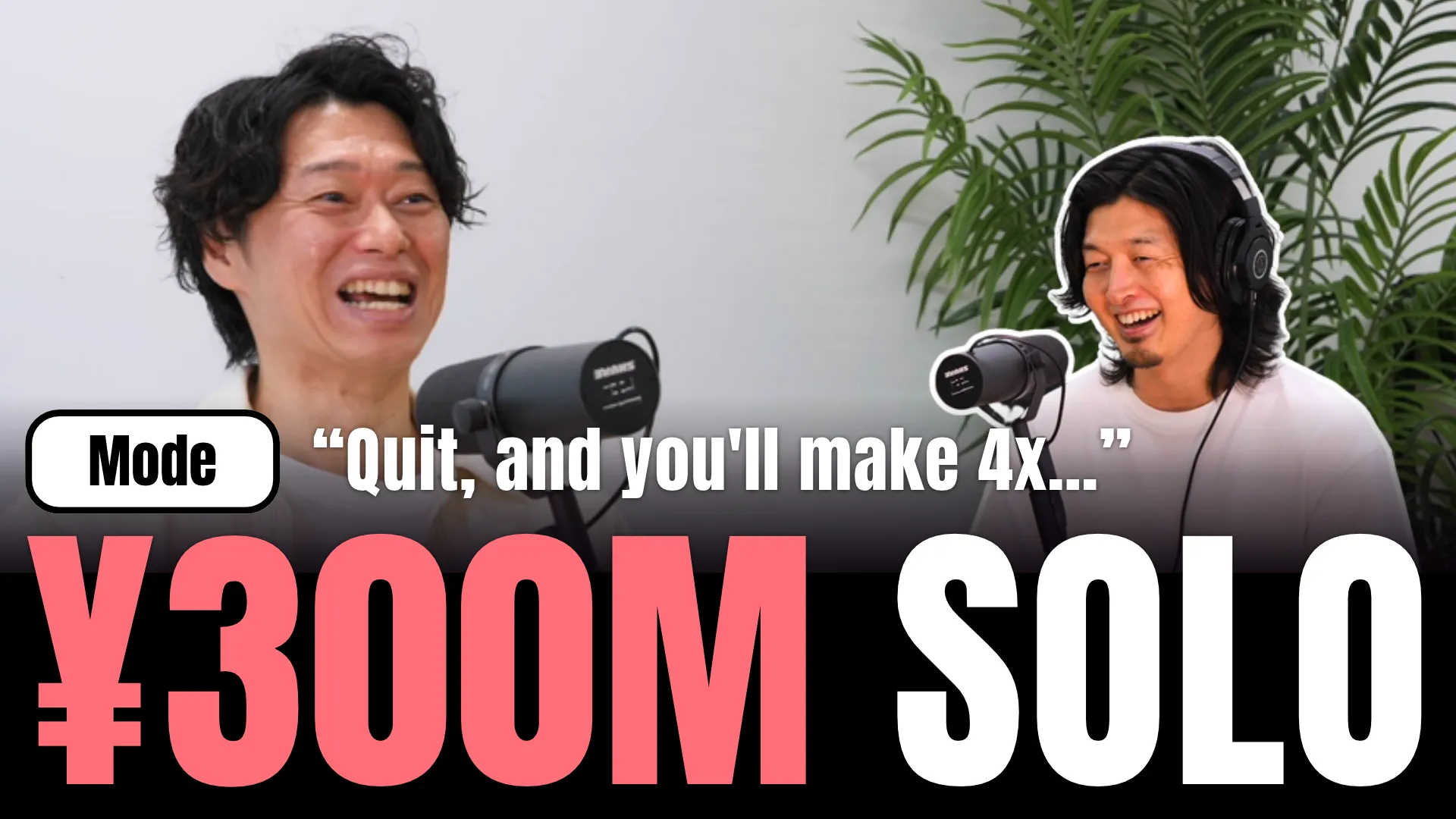
And then I got an email from Fender saying they'd sue me. A really long one. I couldn't tell if it was real or fake. There was no AI back then. It came from Fender in the US, so I had an outsourcer who could translate English translate it, like, "He seems kind of angry, doesn't he?" But it turned out he really was angry, like, "Enough is enough, you." So I pulled Fender from eBay entirely.
Is that so?
Probably a complaint went to their distributor over there.
That's usually how it goes. It happened on Amazon too. "This guy selling on eBay, enough is enough." For brands that have an authorized distributor, yeah.
People doing it as a side business while working as salarymen don't know about rights and stuff like that, right? The relationship between the maker and its sole distributor in Japan.
We didn't know.
We figured you could sell anywhere on Earth, in that era.
Right.
Nobody thought otherwise.
When there's a price gap, you know. Gradually, those things started to appear. When I was selling Casio, G-SHOCK, and so on, I remember getting those warnings too.
A few Japanese manufacturers sent me warnings too. Japanese guitar makers, saying please stop listing on eBay. I actually called the instrument store. "Why? If I sell, you make money too, right?" That kind of thing.
They see you as a reseller type.
Yeah, I get that, but... you know, "Be that as it may."
Is this really okay for YouTube?
This was 14 years ago, you know. You can't do that now. Back then, we did all sorts of things.
But it was fun, wasn't it? Feeling our way.
There was way more of that trial-and-error feel than now. And that meant there was a real information gap. That's actually why I came to Tokyo too. If you're out in the countryside, you fall behind.
I get that.
Also, there's nobody around doing the same thing. In Hiroshima, nobody's doing eBay. Because of that, I came to Tokyo.
Me too.
(From here, the talk moves on to his publishing and seminars after earning money with guitars.)
So after you joined Mr. K's school, is that when you started doing a school and consulting yourself?
That's when it started.
Was that also from learning around Mr. K's circle? Or Kodama-san's circle?
I think it was from Kodama-san's circle. They told me, "Nakamoto-san, you're a great talker, you're approachable, you'd probably sell well, so you should do it. Start a blog and a newsletter." I thought, "Oh, okay, let's do it." Until then I wasn't putting anything out at all. I was just an ordinary eBay player.
Kodama-san featured me, gathered people doing eBay US, and had me appear in something like a YouTube show. That's when it started.
Is that YouTube show still around?
I wonder. I think it's probably gone. It was Kodama-san's channel, though. Now he's running things cleanly with FMC, right? It was clean back then too, but I don't think it exists now.
I'm so curious.
But it was fun, it really was.
So you started putting out information, and started doing seminars one after another at Forum 8.
Right. And I was still doing eBay all along. I kept saying at seminars that guitars sell on eBay, so naturally a ton of people started selling guitars, and it stopped selling.
A textbook case actually happened?
A textbook case.
Guitars aren't a very wide market, are they?
The market was a small niche.
You even went as far as saying "guitars" when you put it out.
I did, I did. Everyone in the reselling world hides the details, right?
Right.
I laid everything out in the open, because it makes for good material. And it stopped selling.
But wouldn't it have stopped selling for the others who started too?
I wonder. Right now, on eBay, there are tons of guitar photos from people dropshipping. That's kind of my fault, isn't it? So honestly, you should stop doing that.
Repairing and reselling used luxury goods, and eBay's authentication service
With used brand-name goods today, you buy stock, repair it, clean it up, and take photos.
There were accounts like that on eBay back then, right?
Yes, there were.
Back in Hayashi-san's Terapeak days. Does Terapeak still exist? Didn't eBay acquire it?
Did eBay end up buying Terapeak after all? That system is already built into eBay now.
When Terapeak was still independent and Hayashi-san was the agent in Japan, you could see things like seller rankings, right?
Yes, you could.
The top sellers were all used brand-name goods. So we skipped it. Like, "No way, not for us." But it did make me realize that stuff sells.
Yeah, exactly. When you hear someone sells used luxury brands on eBay, you get the impression they're selling quite a lot. How many years ago was that?
A long time ago. Like 12 or 13 years ago.
And that's still going on today. Plus, with today's weak yen, it's gotten an extra boost on top of that.
So are the margins different? Compared to dropshipping.
Totally different now. It takes effort, like doing the repairs, but even factoring that in, it works out fine.
How much are we talking about?
I mostly do Chanel right now, and a gross profit of 50,000 yen on one sale is totally normal.
Bags, you mean?
Bags. The purchase price is pretty high, though. Even a slightly dirty used one can run 100,000 or 150,000 yen, easily.
And repair means things like touching up the corners, closer to cleaning, right?
Closer to cleaning. If you repaint the whole thing, it won't pass eBay's authentication. If you change all the colors, or touch the Chanel logo, that violates the policy, so I don't touch any of that.
It's like a car. If you repaint a whole car, it's treated like an accident car.
Same as cars. Well, not exactly an accident car, but normally nobody does that. If you repaint a new car, it's probably no longer a new car. So on eBay too, with Vuitton, Chanel, Hermès, if you repaint the whole thing, it won't pass authentication. I don't do that, and I still make plenty of profit.
Like with the guitars earlier, it'd be a problem if word gets out, but right now there's kind of a bug. Have you heard of going through eBay's authentication service?
No, I haven't.
For high-end brands priced at 500 dollars or more, there's a list of eligible brands, and if you're selling to the US or Australia, the item goes through an authentication center.
When it goes through there, does the item physically go through?
Yes, the item goes through, and when eBay's authentication center says, "OK, it's authentic," it goes on to the US or Australia. And right now the seller only pays domestic shipping, one way. There's an eBay center in Ota Ward, Tokyo, so when it sells, the instruction is to ship it there. You just ship it to Heiwajima in Ota Ward.
For domestic shipping, 1,000 or 1,500 yen is enough. From there, after it passes authentication, the trip to the US or Australia is covered by eBay. Well, "covered" to be exact: the buyer pays 35 dollars if it goes through the authentication center. And I think eBay covers whatever goes over that.
Wow.
So it's really good, the items that pass authentication. That's all I do now.
Does it always pass? Brand items, I mean. Or does it depend on whether the buyer wants it?
If the listing meets the criteria, it becomes an Authenticity Guarantee listing. If the price is 500 dollars or more, for brands like Vuitton, Chanel, or Hermès, and you fill in all the details and list it, then it goes through authentication. From the customer's side it costs 35 dollars, but eBay guarantees it. So it's reassuring for the customer. It's not a knockoff, not a copy. Honestly, for an American, 35 dollars is pretty low these days, right?
About the price of ramen.
About ramen. Slightly more than ramen.
Probably about a lunch.
Right. They're just like, "Oh, if it's that, I'll pay." So right now it actually pays to send items with a bit larger volumetric weight. Things like Boston bags or backpacks, a 100-size box. Your variable cost, meaning shipping, drops massively.
Because if you sent it by courier normally...
No, no, normally it's easily 10,000 yen or so. And now it only has to go as far as Ota Ward. I think that campaign will end somewhere along the line.
Is it being run as a campaign right now?
I don't know. I'm a former official consultant, not an insider, so I wouldn't know. But I think eBay wants its Japanese sellers to sell more. From eBay.com's point of view at headquarters, they probably think, "Why only this much?" Globally, considering the size of the market, Japanese sellers are a bit small. If you want to raise eBay's sales, you have to raise the average price. If you get people to sell high-end brand bags, the average price will definitely go up. So I think the idea might be to put measures like this in place while getting them to sell more and more. But I don't know.
Isn't that a huge opportunity?
It is. I wonder why nobody's doing it.
The domestic sales channel he can't reveal, and why sourcing judgment matters most
With repair-type items, in Japan do you just sell them on Yahoo! Auctions or something?
Domestically, really... the main sales channel that most Mono Rebirth members use, sorry, I can't say it here. Some people sell on Mercari or Yahoo! Auctions, or at dealer auctions, but the main channel is a bit different.
Wow, now I'm really curious.
For that, please come ask at Mono Rebirth.
I'm curious.
Honestly, the teacher I'm working with right now has built up amazing know-how over the past few years. We don't talk about it publicly, but of course it's fully compliant, so it's nothing shady. It's incredibly fast, even the cash flow. So right now it's very repeatable.
Does Mono Rebirth have an entry fee?
There is an entry fee. We take an entry fee and a monthly fee.
And there are still people doing it even while paying that, right?
Yes. They can earn that back easily. There are people earning a ton, really amazing. I saw that and started doing it myself. The results reported by the students are really amazing. I thought, "If you can get results like this, why don't we do it too?"
As for the repairs themselves, my staff and outside contractors do them, since I can't. I only handle the exit side.
And the entrance? You don't buy directly from people, do you?
We don't buy directly from individuals. On the sourcing side, it's just normal: dealer auctions like Ecoring or Aucnet (Japanese dealer auction services), and otherwise we buy from online dealers.
Can anyone do that?
Anyone can.
With brand-goods reselling, what I've learned from doing it myself is that the most important thing isn't the repair, it's the sourcing. Sourcing above all. It comes down to how well you can judge what to buy. That's what I teach a lot.
Do you get to know the brands well at Mono Rebirth?
Yes. What you realize once you try is that even with Louis Vuitton there are tons of SKUs, and all kinds of production years. The fast-growing people really narrow it down. They have a specialty. If bags, then bags, like handbags, this Monogram one, that Alma one, or this Chanel tote bag. They narrow the SKUs and dig deep into the products that make money. "I know this area really well, but I know nothing about that area." Then they gradually add SKUs and expand.
With dropshipping, you just list a flood of items. That's completely different. Spreading thin and wide doesn't work with held inventory.
Right, the way you fight is quite different with held inventory. We were more of a "thin and wide" type too, so switching was quite hard. With FBA too, for example, thin and wide is hard. In the end, with exporting, the paperwork changes depending on the item, the permits change too, and the margins differ, so how you spend on ads differs too.
Right.
So I thought changing your way of fighting was pretty tough, but they teach you all that.
Yes. In my case, I'm being taught directly by the teacher who was my business partner for many years.
So you're a student, Nakamoto-san?
I'm a student. I do the marketing, but I'm also just one of the students.
I see.
But for eBay, that teacher doesn't know eBay, so I'm in charge of that part.
Partnerships tend to fall apart. Can this work for guitars and watches too?
Nakamoto says he has worked with that teacher for about eight years. The conversation then turns to how collaborations and revenue shares often end in fights, with one side going independent or arguing over who took whose customers.
We've kept it peaceful and long-running.
Is that all you do now, Nakamoto-san?
Yes, that's all. Right now I want to grow Mono Rebirth into a really good community. For the next two or three years, I want to put all my resources into growing it. And occasionally I ride my motorcycle.
So you're not doing guitars anymore?
Guitars, no, I'm not doing them anymore.
And eBay is only brands now?
On eBay it's only brands now.
I wonder how guitars would do. Since you've done used brand goods, I think that approach can be applied sideways. Used guitars, junk guitars, repaired. Guitars sold at places like Second Street or Hard Off (Japanese secondhand chains), an American would probably see those and think it's a bug, they're so cheap. At that price, in yen, they'd think, "Wait, is this real?" If you clean it up a bit, take nice photos, and list it on eBay, it'd probably sell for a crazy price. I think that's quite possible. But shipping gets expensive with guitars. And guitars don't pass authentication, right?
Guitars don't pass authentication, no. It's high-end brand bags, and watches. Right now, watches priced at 2,000 dollars or more qualify for the Authenticity Guarantee. Watches are good too, actually.
Used ones?
I sell quite a few used watches too. That's dropshipping, though. You can do it with dropshipping. They don't sell like crazy.
But the unit price is high, so it's good.
Yeah, high unit price, so it's good.
Those watches must be expensive too.
I won't dig into watches here. But when the unit price gets big, the consumption tax refund gets big too.
A consumption tax refund on exports is not profit
That consumption tax refund issue, wasn't there some kind of argument?
Not exactly an argument, more a difference in interpretation. And I'm taking a stand on it.
Right, I saw a glimpse of it.
Honestly, that's our fault.
What do you mean?
The old guard, the export influencers, said that export refunds are profit, and kept saying "Exporting is great" and so on.
A lot of people were saying that.
And the result of all that saying is where we are now. If you're a business owner, you'd understand: it's a result of input tax credits. The consumption tax you paid at first just goes out and comes back, right? They made people think it was easy money, and that's really not good.
But it does look like profit, because it comes back later.
It does. It gets transferred to you in cash from the tax office, and you can't help but go, "Oh!"
But it just goes out and comes back, after all.
Nakamoto and Eiki discussed export consumption tax refunds as a return of tax paid on purchases. They also noted that their selling prices include a margin on top of tax-inclusive purchase costs, and talked about how looking at the refund in isolation can make it seem like an extra gain.
The other day on X, someone was reporting an "expected refund profit," profit including the refund. They'd joined some school or other and started eBay. "Expected refund profit, 300,000 yen a month," something like that.
What's "expected refund profit"?
I think it means profit including the refund. Counting the refund, the extra 10 percent comes back as profit, basically. I was like, "Oh no."
That's the same as calculating both sides without tax, isn't it?
Exactly.
It got a bit complicated. But you can't tell, right? Office workers doing a side hustle for the first time.
No, they can't tell. Of course not. So I stopped taking on consulting, including all of that.
I see. And now that school is Mono Rebirth.
Yes.
Didn't you write that in your LINE name?
Did I?
Wasn't it in your name on LINE?
Maybe I did.
Something like "Nakamoto@Monori."
Right.
I'd been curious about it. What does it refer to?
Designing it as a brand, not as consulting. Meta ads and Antre bring in customers
Nakamoto says he presented Mono Rebirth differently from "consulting" or a "school."
Well, I'd been aware of you since 14 years ago, Eiki-san. I thought I had to design the branding and the service properly like that. If you sell it as consulting or a school, with no subscription, it's an info product no matter how you cut it.
Yeah, an info product.
Right. So I wanted a different way of presenting it. It's still an info product in the end, but with proper branding, and a clear system and service. I started it this June.
How are you getting customers now?
Just Meta ads, normally. And there's also Antre, a franchise portal site run by Recruit (a major Japanese HR company). I'm running ads there now too.
Does it bring people in?
Yeah, every now and then. The customers from Antre are really good. A lot of them are proper company employees.
What do you mean by that?
I mean a lot of them are solid company employees. When you sell it as an info product, some of the people who come are a bit odd, aren't they? With Antre, there's none of that.
Right, going back to what you said earlier: PRIMA, LISMOA, the apparel brand Eiki-san ran. Everything Eiki-san has done so far gives me the impression that the branding and the design are done properly. From where I stand, looking from outside.
Is that so? Maybe I didn't think about it that much, but...
Of course you did. Come on. I can see it.
So is that part of why you chose that name?
Yes. Partly because doing the same thing forever gets old, too.
eBay lately: past the tariff chaos, with payouts through Payoneer
How's eBay doing lately? I don't know the eBay scene in general.
I think it's back to normal. During the Trump tariffs it was total chaos, but we're selling normally, and the people in Mono Rebirth who do eBay are doing great. They're selling normally and making a profit.
When the tariffs hit last year, it seems a lot of players dropped out. So now it's like it never happened?
Not that it never happened, but the people who understand it are doing it properly, I think. People who go "DDP, DDU, what's that?" probably can't really do it.
That was the original $800-or-less threshold, right? The de minimis, the duty-free threshold. The "no duties charged" rule went away.
Right. It's confirmed that it's gone, and still ongoing. That's caused a lot of fuss. They call it DDP and DDU. Now on eBay it's the seller who adds the duty to the price and sells. That's the default now. It used to be that the buyer paid the duties and sellers didn't. Now the duty is already paid at purchase. DDP is the default. People who handle that properly are selling fine, I think.
So it's paid upfront?
It's paid upfront, yes.
How do they collect it? Does eBay collect it?
eBay collects it, and eBay pays it to the government.
Well, that's easier if they do it that way. When we were doing it, we thought no duty applied, but it did, and we got a lot of complaints. The customer would get a bill from FedEx saying "pay this," like, "What is this?" "I wasn't told about this!" "It's your country's duty, isn't it?" That kind of thing happened.
Exactly.
So in that sense, has it gotten a bit easier?
Yes. People who didn't really understand it, or thought "eBay is a hassle," have left, and the people doing it properly have stayed.
I don't know from experience, but payments, back when we were doing it, went through PayPal. We wondered why it was separate, like, why does eBay have no payments? How is it now?
Now, the customer pays through eBay, and the sales that come into eBay go into Payoneer. Since eBay and Payoneer are linked, the sales land in Payoneer, and you transfer it from Payoneer to your own bank account. That's the flow.
So it's basically the same as Amazon overseas. Does it go into Payoneer in dollars?
Yes. Dollars, euros, pounds, each currency.
And it's converted to yen when you send it to Japan?
Yes.
Compared to PayPal, there's a bit of a lag in cash flow, right?
I'd say there is a bit.
How often does Payoneer pay out?
It's quick, it arrives within a few days.
Does it come in per transaction?
No, it's by period. Amazon takes about two weeks, but this doesn't take that long.
So the cash flow is better than Amazon. But with PayPal it was instant, wasn't it?
Well, instant, yes. With PayPal, if you said "pay me out now," you got paid.
PayPal was a truly amazing system, looking back now.
Yeah.
And you can't get a PayPal address now, right? In the old days, we got PayPal addresses, and there were direct deals through that.
Yes, there were. You can't do that now. If you even hint at a direct deal, you'd probably get banned right away. eBay bans people fast.
What is it, do they crawl with AI?
It's probably just keywords.
Just keywords?
So quite a lot of people get banned. When someone creates a new account, even if they've done nothing wrong, they get suspended right away. It's quite a hassle.
Can you buy and sell eBay accounts?
Do people buy and sell eBay accounts?
No, I don't, and I think it's a policy violation.
Is it prohibited?
The other day eBay Japan said something about that. I think buying and selling is not allowed.
Take a business transfer, for example. The company operating the account changes. With a share transfer, you're buying the whole company, so the next owner can keep using the account as is. But with a business transfer, if you say you've sold the eBay business, the account has to have its name changed. Isn't a name change possible? On the Amazon side there's an official procedure.
I'm not sure, I don't really know that part. But it's probably possible, right? Business transfers aren't illegal.
Not illegal. I think it's an issue with the terms of service. Probably what they said the other day was about platforms for buying and selling accounts, that you shouldn't buy and sell on those sites. I'm not sure, though.
The reason I ask is that we have an eBay account we're not using. It has about 4,000 feedback ratings, anyway.
Wow, that's a lot.
It's just sitting there. I think it would sell, but I'll hold off if it would violate the rules.
On the flip side, I have an amazon.com account too. I'm not using it at all now, but it's one I used to sell with PRIMA about 10 years ago. It's probably not been banned.
That's actually pretty hot.
I've heard that old accounts have looser brand approval applications and so on than recent accounts. We have a spare one too, and I wondered if it would sell, but when you look up amazon.com accounts...
It's a waste, isn't it?
It is a waste. I'm sure some people would want an old account, and we have ones we aren't using. But as for Amazon, if you ask whether they want that, I don't think they really do. They'd rather you create a new one. Officially there's no such thing as an account sale, but when you say you've sold your Amazon business and the owner changes, you have to change the company name and the bank account registered with Amazon. When we asked about that, they said "Please submit this dedicated form," and I don't know how it is now, but in our time an Excel file was sent to us. You fill in the current owner's and new owner's information, send it back, they review it, and if it's approved, you change the name. So there is an official procedure, though of course it's not written in the help pages.
We have an amazon.com account from about 12 years ago too. Not the account alone, but if you sell something, even as a placeholder, then selling it as a business wouldn't be strange, I think. I don't know, though. In theory it seems possible.
If it can be sold, then of course I'd want to sell it.
Once he started using AI, he got busier
Okay, let's move on to AI topics.
Things like "use AI and you can be more efficient" come around a lot, right? "Wow, this is so handy." I only really started using it properly about six months ago, this year. Don't you get incredibly busy?
Oh, absolutely. Because there's more you can do.
It just keeps growing. I end up sleep-deprived. I used to hate all of it and hand it off to other people, but now I can do it myself. So I'm really busy right now.
I get that.
This might not be your area, Eiki-san, but there's the idea that programmers will lose their jobs, because they won't write code anymore. But amateurs like us, who don't really know what we're doing, are now having AI write code and building all kinds of things. I think a lot of people are doing really dangerous things, and I think demand will grow for people who teach that properly.
Security and so on.
Security and so on. I mean, even I'm doing it now. Firebase, was it? Firestore and so on, I'm building a database with Claude and ChatGPT.
Locally, on your computer?
No, I signed up for it and I'm building a database for a system. I've had all kinds of eBay tools built so far, and when you ask for a quote, they say 3 million or 5 million yen right away. You're like, "That's expensive! It costs that much?" Then I started building a bit myself with AI, and I thought, "Yeah, no wonder they quote that much." On the flip side, I thought that was reasonable.
Still, I think more people would say "I can do it myself." But when you think about turning it into a service, it's hard. It comes down to responsibility, in the end. You might be able to build it if you tried, but can you take responsibility for it? To take responsibility, you have to run checks, do reviews, do testing. If it's just for yourself, that's totally fine. But when hundreds of people are using it and the server can't go down, you have to think about infrastructure too, and yes, it does cost money.
"Middle-aged guys who only vaguely get it" are doing a huge amount of dangerous stuff
And lately I've started building things with Claude, like that Firebase we mentioned earlier, and GitHub, and also Netlify, where you just drop in a zip file and it's already uploaded. Services I'd never used before, I'm using a ton of them right now. Without really understanding them, just because "Claude says so." I think a lot of middle-aged guys who only vaguely get it are doing a huge amount of really dangerous stuff right now.
Sounds likely.
I think big accidents will keep happening next year and the year after. I don't know, so I probably don't realize what's dangerous. If someone said, "No, Nakamoto-san, if you keep doing this, it's seriously dangerous," a place that tells you that would be in huge demand, I think.
There are some tools for security now, at least. Like the GitHub repository I mentioned, which is the set of files and folders you keep per project. Things like Claude or ChatGPT will scan it and check whether there are security problems. Those have started popping up lately. So I think fatal problems can mostly be prevented that way.
Is it like having them check each other? The AIs checking each other?
I don't know how it works internally, but it's a kind of security audit. It says "I checked, this part is bad, severity 100," and a list comes up, and it says "let's fix this," and it fixes it for you. Data comes out too, so if you use those tools, I think it's relatively safe. But no matter how far it goes, AI has no morals. It has the technical skill, but it has no morals, so I think problems could come up there.
(From here the talk turns to Gemini. When Eiki had Gemini collect source data for an app, it produced a lot of hallucinations, meaning plausible-sounding false information. That led to a discussion of whether the benchmark scores that make headlines with every new model hold up in real use.)
With that Mono Rebirth I mentioned, I'm building a service for members to use right now, but unfortunately I don't have that background, so I feel that a lot. I think it's a bit scary that I don't realize what's truly dangerous.
Even if the result turns out fine, you can't say for sure it's safe, right?
It's like on a motorcycle, being told in advance, "If you take that curve at that speed, you'll die."
Right. You have to take the corner without knowing how fast you're going.
That's our specialty, so please feel free to ask us anytime.
A year of AI progress: he can make promo videos and landing pages himself, so he's busy
Conversely, I want to ask you, Eiki-san. These AI updates over the past year or so, from your perspective as someone who's been building systems, how big is the shock, or the impact? I think it's amazing, but from a pro's view, over this past year?
Of course some things are faster than I imagined. But compared to a year ago, if you play with it a bit more, some parts haven't really changed. In the end, I'm just as busy as before. What you can do has definitely increased. But in the days before AI, say you had 100 things to do, I think you'd actually get maybe 20 done. The other 80 just never got done, they vanished as tasks. But with those 20 done, you still feel like you finished, since you couldn't do more than that.
Once AI came along, even if not all the way to 100, you can now do something like 80. And once you can do 80, what you can see is 160 or 200. So the structure is the same as at the start. The share of what you actually want to do hasn't changed much. The absolute amount has gone up, though. So emotionally, it's always tough, and the toughness hasn't changed much. In terms of how much you're not getting done, you're still short.
So people who don't get greedy are probably super happy, right? "My 20 has become 100, and honestly there's nothing more I want to do." If that's you, then AI is doing almost everything for you.
It was yesterday or the day before, I think. On X, Eiki-san, you posted something like a promo video.
Ah, the motion graphics?
Right. I was like, "What is this?" The LISMOA promo video. What kind of prompt was that?
Honestly, it was a single sentence. There's a repository for developing LISMOA, that GitHub folder I mentioned earlier. I told it, look at that and make a promo video using motion graphics for LISMOA, at a level nobody has ever seen. It was a prompt I picked up somewhere, used as is, and that was really all there was to it. And when I said that, it came out like that, right out of the box. You can get that far without any special tricks, so I think that opens up a lot of uses.
It's like, "This is totally fine as it is."
So as that level gets reached in all kinds of fields, I think what you can do will keep growing. Until now, with video, you had to redo it over and over, change the prompt, fine-tune it, combine all kinds of tools, or it was hard to pull off. But the other day, it came out like that with just Claude's Opus 5.5.
And it's not just systems. Lately I've been making landing pages myself, all the time. Until last year I had a web designer make them: I'd write the copy and say, "Make it like this." But now you can do that yourself, right?
You can make infinite variations. You can run tests, no problem, and you can write the copy too.
The reason you're busy is that you do it all yourself, right?
Because I do it myself. And even if I asked a designer I've used until now, saying "you're using AI, so do it for a tenth of the price per page" would be hard, right?
True. "You can do it, right?"
He wants an "AI manager." Closing the books with AI, too
Personally, when it comes to how to use AI going forward, in terms of job types I think there'd be something like an "AI manager." For creative work of all kinds, a person who understands the process from input to output, but doesn't have the skills themselves. Since they use AI, they can do any of it: landing pages, eyecatch images, ad banners. I'd want someone like that. Since there's no one like that, we end up doing it ourselves, right?
And if those people charged not per creative but by the hour, even 5,000 to 10,000 yen an hour would be fine, and just that alone would open up a lot of ways to use them. But to hand work off that way, that person really has to have run a whole launch, including ads, or it's hard.
So it'd have to be someone who understands all that. It's not easy. But people who understand that just do it themselves, right?
Do they? Someone who could fit into that manager role would be a person who fully understands all of it, and maybe nobody like that wants this kind of job. But what about someone who could do it by asking you, Nakamoto-san? One person who could use AI for all kinds of work and handle all kinds of industries. Actually, even you could do it, Nakamoto-san, right? If you used AI to write copy and so on. Other people could do that part too. It comes down to how well they understand the business. If you turn that into text to some extent and just include it in the prompt every time, so the AI already has your brain, and you get people to use that AI, it might fill in maybe 70 or 80 percent, even if not 100.
Our fiscal year ended at the end of August. Or rather, it's our closing month, so before coming here today I was putting together the financial data. I had Claude and ChatGPT double-check each other, putting together card statements, bank statements, everything.
And then the data for your tax accountant is done right away. Accounting and so on, that's amazing too. Back-office work is doable.
So honestly, I felt bad for tax accountants.
Honestly, I think it can even do the year-end closing. But there's a cost to learning to do that ourselves. There are things you have to learn, like the timing of interim tax payments, which you never keep track of, right? The notice just shows up, and every time it comes, you go "What's this?" No matter how many years you do it, "What's this?" You think, "Why do I have to pay this much?"
So there are parts where it's easier to have someone do it for you. But as for ordinary clerical work, there's a lot that AI can handle pretty much entirely. Money Forward, freee, Yayoi (Japanese accounting software) are what I think tax accountants are probably set up with now, but I don't really get it anymore. If the government let us enter data straight into e-Tax (Japan's online tax filing system), wouldn't that be enough? That's still a long way off, I think. But it's technically possible, right? Every month you compile the monthly closing numbers and keep feeding those into e-Tax, so when the year closes, everything comes out right away. I think that's entirely doable. It's not like we're trying to do anything shady, so I'd like the tax office to just let us do that.
For us, it's less about doing all the clerical work with AI, and more that we're at the stage of raising quality with AI. Checking is like that, and for sorting transactions we've been doing it by eye until now. We use Money Forward's cloud accounting, and it has rules for automatic sorting, but the accuracy isn't great. But Money Forward released an MCP, so it feels like that side is going to get a lot easier.
So someone like you, Eiki-san, who's been doing this in that field all along, and people like us, who hated that stuff and threw all of it to outsourcers or freelancers, probably have very different ways of dealing with AI. I really feel that. Do you feel like you're not using it to its full potential?
I do, yeah. I probably am not using it well. I think people without brakes just keep going and going, but I get a little scared. I go through GPT, Claude, and Codex, I think, asking around as I go, and it works amazingly well, but I always have a vague sense of anxiety: "Is this really okay? Is it okay to run it?"
But I think a lot of people feel that way.
I don't touch the really important parts either. I do work on LISMOA's development too, but I'm not an engineer, so except for the truly critical parts, it's basically only the parts you can see. The backend database, the actual infrastructure: if I touched those and something went wrong and it stopped, it'd be a huge inconvenience for users. But on the front end, you can check it before release, and since it's about looks, you can tell by looking, so nothing that big happens. For that part, I lean toward speed, and that's the part I handle. But the back end scares me, so I avoid touching it. That's how I do it.
Born in Hiroshima, a family that moved for his father's job, and a fifth-choice high school in the city lottery
Also, what I wanted to ask you, Nakamoto-san, is this. There are people who've been doing eBay all along, and people who want to start, but the biggest point is that I really want to know why you were so successful. If you try to trace that back, it often goes back to childhood. There's often something where you think, "This person was able to work this hard because of this." The person themselves doesn't notice it, though. So I'd like you to tell me from the day you were born.
When were you born?
Showa 48. 1973.
Oh, the Year of the Ox?
Year of the Ox.
Then we're the same.
How old are you now, Eiki-san? I'm 53.
I turned 41 this year.
Then we're exactly one zodiac cycle apart.
I was born in Hiroshima, and I moved around a lot, because of my dad's job. My dad was a salaryman and got transferred all over the country, and we lived in Tokyo too, when I was little. I was born in Hiroshima, then right away he was transferred to Machida in Tokyo, and I was in Machida from kindergarten through the early grades of elementary school.
Oh, really? Wow.
Then we moved back to Hiroshima, and I went to elementary school there until fifth grade. After that we moved to Matsuyama.
Matsuyama. I think you mentioned that, yes.
Right, I transferred to Matsuyama, to Shimizu Elementary School.
Shimizu Elementary. Katsuyama Junior High.
"Katchu."
A bit north of the castle.
That's right.
To us, that's the big city.
Where in Matsuyama were you?
I'm from Yogo, which is really the farthest edge of the city. The "yo" in Yogo means "leftover land." It's right before Masaki Town, the very edge of Matsuyama City. From there, a place like Katchu is the city center, like Minato Ward.
I was in Matsuyama until the third year of junior high, I think.
When you started doing Amazon in Matsuyama, Eiki-san, that probably caught my attention. I know Matsuyama.
(From here, the talk turns to memories of Matsuyama, with Gintengai, Dogo, and Omogo Dam coming up.)
Then I moved back to Hiroshima. Junior high, high school, and college were all in Hiroshima.
What kind of kid were you?
I have one brother, and I'm the oldest. If anything, I was a very serious kid. Not wild at all. I tried to live up to my parents' expectations, very serious, very Showa-era, just staying on the rails.
Were elementary and junior high just regular public schools?
Public. High school was public too.
Did you choose it yourself?
Well, back then in Hiroshima, people who are old enough to remember will know this. The high schools in Hiroshima city were called the "Six City Schools" (Hiroshima's public high-school lottery group), six of them. Kannon, where I went, and Kokutaiji, and Minami, six high schools in total, and it was decided by lottery. Not "where do you want to go." You got assigned to one of the six by lottery.
Like a prize drawing? That's a thing? Isn't that crazy? It could even end up really far from your house. That'd really suck.
Right. Like a draft among the six.
So what about exams? Is it one exam for all six schools?
You take a joint six-school test, like the old national entrance exam. If you passed, you got assigned to one of the six. I think you wrote down first choice through sixth. I remember writing something down.
So there is a wish, technically.
Technically. And I got my fifth choice.
Fifth choice. Not what you wanted at all.
It wasn't what I wanted, but high school was actually a lot of fun.
Was it close to home?
It was far. I biked about 40 minutes every day, crossing Hiroshima city top to bottom. Every day, rain or wind.
Years of bands and X JAPAN in junior high and high school
Did you do anything, like a club?
I did a bit of tennis in a club, but mostly the band. That's when I started playing in bands, in junior high and high school.
Same as me, actually. I play bass.
I played drums at a school festival. I was the guitarist, but the drummer ditched at the last minute.
What did you play?
X JAPAN.
YOSHIKI. "Kurenai"?
Not "Kurenai." It was super early indie-era stuff. There's a song called "Sadistic Desire," and "Stab Me in the Back," and "Orgasm," that whole era.
But by the time we were in junior high, it had been a while. hide died when I was in sixth or fifth grade. They'd already broken up, so playing their indie stuff, not "Vanishing Vision" but "Sadistic Desire," which nobody knows.
For me, I was the generation that grew up listening to X in real time. X appeared on shows like Takeshi's "Genki ga Deru TV." We played X at the school festival too, and there was a live house in Hiroshima then called Namiki Junction, where we played X and ZIGGY covers. Do you know ZIGGY? Have you heard of them?
ZIGGY and so on. Back then, were people split into BOØWY fans and X fans?
I played X, ZIGGY, and LOUDNESS and so on.
The era is different. Wait, is this upbringing stuff okay?
That actually led to the guitars on eBay. hide's signature guitars sell pretty well. The heart one. Signature guitars are popular, the musician models. I sold a ton of those on eBay.
True. There was also the Gibson, B'z's Matsumoto-san model.
I sold the Matsumoto model too.
Oh, right. It does connect, doesn't it. Was PATA (X JAPAN's guitarist) on a Gibson too?
PATA's always been a Les Paul, right?
Right. He used to have a black Les Paul. That takes me back. So you're the real-time generation. I'm jealous.
Real-time was when GLAY and those bands came out.
GLAY, L'Arc-en-Ciel, LUNA SEA and so on. LUNA SEA was the later part. What I know is the "Storm" and "Shine" era.
I went to an X show in Hiroshima, at a place called Sunplaza Hall.
To the live show? Seriously? The concert?
Then you know X-HIROSHIMA, Nakamoto-san.
X-HIROSHIMA (an X JAPAN tribute band), of course I know them.
I've been getting my X fix from X-HIROSHIMA lately. I absolutely love them. Simply put, they're really good. Insanely good. Seriously high level.
(Here Eiki tells of a "miraculous encounter." On the day he went to Hiroshima for a BABYMETAL birthday show, he stumbled on an X-HIROSHIMA set at a local event near the venue. Many BABYMETAL fans had gathered there too.)
What were they playing then?
Songs? They played the whole lineup. "Kurenai," "BLUE BLOOD," that era. "WEEK END." They really do songs from around the "Vanishing Vision" era too. The indie stuff, the ones on YouTube.
Oh, really?
Yeah, it's up there.
"Vanishing Vision," that era's my favorite. "I'll Kill You" and some of the really intense ones. Is this okay for YouTube?
It's fine. There are tons of X fans out there.
True.
He made a Marty Friedman signature model
About the X stories, I'd like to hear about your connection with Marty Friedman. I heard a little bit, but I haven't heard the details. What was that about?
Well, through someone I was introduced to the president of a certain effects pedal maker. That pedal maker had no overseas sales channel, so they wanted to sell abroad. I asked, "Can I sell them?" and we agreed I'd sell them on eBay. Things were moving along fast, and then...
A Japanese pedal maker?
Japanese, yes. A really solid company. I think it was originally Sony-related, a maker started by people who spun off from Sony. So they agreed to let me sell their pedals. We figured, then let's sell on eBay. Then we thought we needed a face for it, like a brand ambassador. When we asked who'd be a good guitarist, someone said, "Marty Friedman is in Tokyo, right?"
We figured it was a long shot, but let's contact him. I looked it up, and Marty Friedman's official website had a contact form. I wrote, "We have a great pedal, and we'd love for Marty to play it." Right away, Marty's manager called me and asked, "Could you lend us one as a sample?"
At that time my office was in Shirokane. They said, "Our office is in Azabu-Juban, can you bring it over?" and I said, "Sure, I'll come right now." I took the pedal right over, and when Marty played it, they told me, "Marty says this is really good." I was like, "Seriously?"
We had meetings and talked business, and it turned into making a Marty Friedman model, a signature model. I got to make Marty's signature pedal, and I sold it.
Did you sell it on eBay?
Only on eBay, only overseas. In Japan the general distributor has the rights, so I couldn't sell it there. They said overseas was fine.
It sold pretty well, but the lot size was limited and the contract ended, so I don't sell it anymore. It sold well and it was fun. I got to do a lot of things. Some American YouTubers featured it as sponsored content. There are people who review pedals. I sent it to them to try out, one of them tweeted about it, and Marty replied to the tweet. Then people came to eBay and bought it. That was a lot of fun.
Didn't you sell it on Amazon?
No, I didn't sell that on Amazon. Only eBay.
Oh, I just remembered. At first I was actually going to do crowdfunding. On Kickstarter in the US, in limited quantities, a "Marty Friedman signature model," basically. We were saying let's do it, but we got stopped at the very last step. So we dropped Kickstarter and sold only on eBay.
But you'd probably raise a lot with crowdfunding.
Marty Friedman is hugely well known overseas. He has tons of devoted fans. It was fun.
About Jimi Hendrix level?
About Jimi Hendrix level.
That's incredible. Though I don't really know Jimi Hendrix. Not many people have an experience like that.
What I wanted to say with that story is: just try it even if it's a long shot. If you assume it won't work and don't act, it will never happen.
True. Something that never happens did happen, there.
(Here they spent a little time on a funny story that plays on a well-known Japanese saying about taking a shot even when the odds look slim.)
Straight out of college into a catalog retailer: what the call center taught him
After high school I went to a college in Hiroshima, and I was just a normal Hiroshima college student. The first company I joined was Nissen (a Japanese catalog retailer), a mail-order company.
Nissen, yeah, famous.
The catalog one. People my age will remember this. Back then they printed these thick, phone-book-sized catalogs and mailed them nationwide. That kind of mail-order company. I joined them straight out of college and was a salaryman until my mid-thirties.
Was it Nissen the whole time?
Nissen the whole time.
So you were already in e-commerce.
Mail order. At first it wasn't e-commerce, though. It was paper commerce.
Catalog commerce.
Right. Looking back, the practical experience I built at Nissen really helps in my work today. For eBay, and for selling content too. It's all about how much of a database you collect and how much you can grow LTV, right? All of it is that kind of business. That I got to handle that stuff at Nissen from my first year, looking back now, was huge.
How did people place orders back then?
Postcards and phone. My first assignment out of college was the call center, and the calls would come in.
They'd read out a number, like that?
Yes, exactly. Customers would say, "Catalog number 4582..." or something like that, and the operator would type it all into the screen.
Not AI.
Not AI. Phone, postcards, fax.
The three sacred analog treasures.
The three analog treasures, seriously. The operator listened by phone, took the order, and typed it in by hand, typing while listening. As a double check, we'd read it back to make sure there were no mistakes: "The total comes to this many items, and the order total comes to this much." We asked about payment on the phone too: "How would you like to pay?" There was bank transfer, and credit card, of course. Thinking about it now, was that okay? We asked for card numbers over the phone. We ran the order and got the card authorization, that kind of thing.
The ones actually taking the orders were the operators, right?
Middle-aged ladies, about 200 of them on the floor.
Two hundred!
Two hundred middle-aged ladies on the phone nonstop. I was a supervisor, so I handled complaints. You mute the line and say, "Sorry, he's demanding a manager," and then I take over. "This is Nakamoto, the manager."
What was the worst caller like?
Some callers say things like, "We're coming over right now," or "Where are you, huh?!"
Sounds like a Hiroshima accent.
Right. Back then it was split by region, and the calls routed to Hiroshima were only from Chugoku and Shikoku. Yamaguchi, Hiroshima, Hyogo, and Shikoku, that kind of thing. The calls came from those areas. It was rough. Complaint handling was the most mentally draining.
Selling by phone to existing customers taught him LTV. The mikan story, and reselling versus selling content
And it wasn't just incoming calls. We also made sales calls. Outbound, it's called. We'd pull up a list of existing customers and call about aojiru (a green juice powder), cosmetics, supplements, to upsell them. "Thanks for your continued business, this is Nissen, the catalog retailer." That kind of thing.
New customers versus existing ones react totally differently, as you'd expect. Existing customers actually buy quite a bit, over the phone.
Wow.
"One month of aojiru isn't much, so why not get six months at once? Buying in bulk gets you this much percent off." "Okay then, send me six months' worth." And the order value goes way up.
You hear about this in business today too, right?
Right. How do you raise LTV? How do you keep existing customers from going dormant? What kind of promotions do you need? All that soaked in during my salaryman days.
That's a really good experience.
It really is a good experience. I didn't join to get into e-commerce, but honestly, I'm just grateful to the company now.
About 15 years, was it?
About 15 years, I think. Having the basics of databases and catalog sales drilled into me was a big deal.
Was that experience connected to choosing the eBay seminar, or did it have nothing to do with it?
Well, in the end, you run ads, spend customer acquisition cost, win one student, and then raise their LTV. The essence is the same, isn't it? So in that sense, I do think it's connected. Dropshipping is a bit different, though.
Right. Dropshipping is a different game.
Eiki-san, something just came back to me. You used to sell mikan oranges, right? Sekiko's mikan oranges. I actually bought those.
Thank you.
That was a textbook product launch, honestly. You pulled it off really well.
The mikan? Did I do that much of a launch?
The shipping window was fixed.
Ah, yes. The boat.
Since it's an island.
Since it's an island, the boat doesn't come every day.
Right. The promotion period and shipping period were fixed, and you told Sekiko's story, and so on. Then people buy, of course.
What I'm getting at is that there's this polarization, the product-selling camp versus the content-selling camp. They tend to clash: "Those consultants making money, they're scammers." But what I think is, if you want to master reselling, the ability to sell content is really important. Telling the story properly, getting prospects to actually buy. So I think we should get along.
The info-selling side is all intangible, so if you don't pitch it well, it basically won't sell, and that side gets better and better at selling. On the reselling side, if the product is good, it can sell on its own, so there are quite a few people who don't try that hard to sell. I think there's that difference.
As for me, I don't remember doing much info selling, but I did run seminars, and when it comes to getting people in, you have to think about that stuff. Even if you say "I'm holding a seminar, my first one," people won't just show up for that. So you have to think about how to show the content is good. And about five years ago, right after I came to this office, I also ran a kind of Shopify online school. In that area, I felt it was completely different from reselling.
True. I see.
So going from college to Nissen, looking back, I feel that all of it connects to a lot of different things.
His income dropped, so he looked for a side business: eBay on late-shift mornings
You were at Nissen for about 15 years, and while you were still at Nissen, you started your side business?
That was a bit earlier than that. I'd already left Nissen by then. I'd switched jobs a few times between small companies, and when you change jobs, since I was in my thirties by then, your salary drops, right? I thought, if this keeps up my income won't grow, so I figured I'd try a side business. That's what got me started on eBay.
I see. Back when you had the side business, what was your lifestyle like? Days off, working hours?
It was a call center then too.
You like call centers, huh.
It's not that I like them. I have so much call center experience that it's the only place I could switch to.
Makes sense. Hopping from call center to call center.
Yeah, exactly.
It's a call center, so there are late shifts and early shifts. On late shifts my mornings were free, so I'd blast through eBay in the morning, take guitars to the post office, ship them by EMS, and then go to work.
Isn't it hard to carry more than one guitar?
My dad came with me back then, in Hiroshima. He helped me out.
Carrying the guitars?
I had to ship about five a day, so I couldn't carry them.
No, you couldn't.
Right. We'd pack them together, take them to the post office, send them by EMS, and then I'd go to the call center.
How late did you work?
On late shifts I was on the phone until about 9 p.m., so I'd get home around 10 or before 11. Then eBay again from there. When I got home it'd be morning in the US, so I'd handle customers from there, basically awake all day.
How much sleep did you get?
In my side-business days, five or six hours, I guess.
You worked pretty hard, didn't you?
Yeah, it was tough. But in my side-business days, I think I was insanely efficient. Work efficiency, I mean. I couldn't get big blocks of time, so I used one or two hours, plus scattered bits of time, like crazy.
When something sold, he sourced it in the bathroom. eBay on the sly at his desk
Wow.
With dropshipping, something sells on eBay, right? Bam, ka-ching. Then I'd say, "Excuse me, I'm going to the restroom," go to the call center bathroom, and buy the item right away. Since it's dropshipping, if it sells out I can't ship, so I'd buy it right away from Ikebe Gakki or Ishibashi Music, then go back to the call center.
So you were sourcing in the bathroom.
Yeah. "Nakamoto-san, you've been in the bathroom a lot lately." "Sorry, my stomach's been bad."
That's hilarious. I love hearing about side-business days. Everyone's amazing. I never had a side business, so I think people with side businesses are really amazing.
(From here, the talk drifts into Eiki's own background: his previous job, how he got into Amazon, and his history with computers.)
For a funny story, there's my own computer, the supervisor's computer. Behind the browser, I had eBay open. I kept doing research and checking things the whole time. And when someone came by, or the president did, I'd just flip it away.
Is it walled off, like a call center cubicle?
Not really walled off. There weren't any partitions, so I had two windows open. One click right here and it pops to the front. When someone came, I'd flip it back.
You're not on the phone all the time, right?
No. The operators are the ones who take calls, and we had different work to do. If it was a complaint, we'd listen in, basically. Other than that, the whole time, it was research, listing, and customer support.
So even back in your side-business days, you had a lot of time.
He wanted out of the call center and kept going: confidence with no basis
In that sense, yes. But like I said earlier, I was self-taught, so I was only netting about 200,000 to 300,000 yen.
Isn't 200,000 to 300,000 yen quite a lot?
But at that point I badly wanted to get out of the call center. I was in my mid-thirties then... no, I was almost forty. I thought, "Is my whole life going to be handling complaints?"
How old were your kids then?
Probably middle school or high school, about to go or not.
So you'd mostly stopped needing to take care of them.
Right. But still, ending my career at the call center was something I really didn't want. Searching online, I found the NBGC world, that glamorous scene, and I learned about things like the Executive Club. I really pushed hard there.
I think a lot of people want to change their situation and get out of the call center. Not just call centers, but any job. But the people who can actually take that step are maybe only about 10 percent. And of that 10 percent who do, the ones who succeed are few too.
So why were you able to do it? What's the difference?
Why, I wonder. When you ask me, Eiki-san, I always talk about this topic, even on my own YouTube I think, but why? Maybe I was just persistent. Persistent by nature, a sore loser. And I think I tried an enormous number of times. People say quantity over quality, and I definitely did a ton of quantity.
When I first started on eBay, I didn't earn much. In my side-business days, for two or three months I was in the red the whole time. It was dropshipping, but I was in the red the whole time. I thought, "This probably isn't going to work."
I think everyone who starts quits right there. So what kept you going?
Looking back now, it's because I had no other information. It was limited. It was eBay, only eBay. The only thing I'd heard about at seminars was eBay, so it was a kind of self-brainwashing.
Nowadays information is overflowing, right? All kinds of stuff shows up on X. But back then, I actually saw people succeeding on eBay at seminars, and I thought, "If they can, I can definitely do it too." I brainwashed myself with that. I was pretty naive.
That's pretty dangerous, I think.
It's a pattern of people who get scammed easily, looking back now. But that's also why I made it, I think.
That might be it. When it comes to going from zero to one, it's about that drive, right?
On the flip side, with Amazon dropshipping, why did it go so well at the start?
In my case, I had an unexplainable confidence. I started around June or July, in 2012, I think. Six months later, at the end of December, I don't remember why, but I had it decided in my head that I would pop champagne at a hostess club. Not exactly a dream, but something I'd never done because I had no money.
In Matsuyama.
Of course. Not Roppongi, Matsuyama. It's cheap, about 30,000 yen.
So to do that, I'd have to be earning about this much, normally. For that, last month had to be about this much, so sales have to be about this much. And if profit is only this much, I have to list about this many items. Working backward, I'd figure out about how many I should have listed today, and I was nowhere near enough. I just moved along that fixed path, and it really turned out exactly as planned.
I think we're kind of similar there. It starts with self-brainwashing.
The champagne was a done deal. So I spent my time making that decision a reality, put simply.
That's funny.
Me too, yeah.
I had that kind of confidence with no basis.
Confidence with no basis. And the success experiences too, since things sell once in a while, and you think, "Wow, it sold, it sold." That accumulation is there. Reselling really has that.
Because the "1" is small. If one sold, you think, "Then 10 will sell." When a guitar suddenly sold, I could easily make 40,000 or 50,000 yen profit on one, and I'd be like, "Wow, amazing." Until then I was a salaryman living on a 30,000 yen monthly allowance, so making 30,000 yen in one go was like, "Wow, seriously." I thought, "Sell 10 of these and that's 300,000 yen." It was that kind of simple thinking.
That accumulation might be one reason you kept going. Wow, that was a great story to hear.
(From here the talk moves to motorcycles: Eiki's ride across the American continent on a Harley six years ago, from Los Angeles to Florida, about 4,800 kilometers, a Hokkaido tour, and his riding friends Gehaa-san and Goro-san. It's off the main topic, so it's left out here.)
Ending: introducing Mono Rebirth
Finally, shall we plug something?
Is it okay to plug it? Mono Rebirth.
Please, go ahead.
We talked a lot, but Mono Rebirth is a service where you repair used brand-name goods and sell through many channels, what we call "exit-side" reselling.
The main channel is a secret.
For the main channel, please come ask here.
Are you holding a seminar?
We hold seminars regularly now, so if you come, you'll understand everything, and I'll tell you everything. Then you can decide there whether to do it or not. As for the way of selling, my partner has been doing it for about eight years, so it's very repeatable. It's not dropshipping, you actually hold inventory, so I think it's good for people who want to sell brand-name, high-priced goods.
I'm really curious about it. I'd love for Hyodo to hear it.
So that's it. Today we had Nakamoto-san, a former official eBay instructor...
Former.
...the "former" Nakamoto-san, joining us. Thank you so much. Let's do a second round sometime.
I look forward to it. Thank you.
Takeaways from this episode
- Side-business eBay exporting reached 100 million yen a year from one guitar brand. He started eBay while working at a call center, and in his best year, with Japanese competitors almost nonexistent in guitar exporting, Fender alone reached about 100 million yen in annual sales. A warning email arrived from the maker's headquarters, and he pulled Fender from eBay
- He stopped teaching because there were too many variables. After the tariff changes, the time and cost of teaching exporting from zero no longer made sense. He doesn't teach eBay from scratch now, and teaches it only as an option inside Mono Rebirth, to people who already sell in Japan
- Now he repairs and resells used luxury goods. What matters most is the eye for sourcing, more than the repair. As of the recording, he says that for eligible brand items priced at 500 dollars or more sold to the US and Australia, going through eBay's authentication service means the seller only pays shipping to the domestic authentication center. He teaches this not as consulting but through Mono Rebirth, a brand with a clearly defined system
- A consumption tax refund on exports is not profit. The tax you paid just comes back, yet influencers made the refund look like profit, and he says they share the responsibility
- Using AI made him busier. The more he can build himself, the more there is to do. He also talks about the fear of building something dangerous while only "vaguely understanding" how it works
LISMOA is a tool for Amazon sellers that connects officially through Amazon's SP-API and Ads API, automatically aggregates sales, fees, ad spend, and inventory costs, and shows profit down to the product (SKU) level. You can try it with a 14-day free trial (no credit card required). Start the free trial
About the author

The LISMOA Team
Related posts